FASHIONPEDIA
Teal Blue Cotton Circle Print Shift Dress
2010s · 2020s · Western
Production
ready-to-wear
Material
cotton blend
Culture
Western
Movement
Normcore
Influences
1960s mod shift dress
A sleeveless shift dress in teal blue cotton blend featuring a geometric circle print in white. The garment has a simple round neckline and falls to above-knee length with a relaxed A-line silhouette. The fabric appears to have a smooth, structured weight typical of contemporary cotton blends. The dress demonstrates the Quiet Luxury era's emphasis on understated design through its clean lines, minimal construction details, and sophisticated color palette. The geometric print adds visual interest while maintaining the era's preference for refined simplicity over overt branding or embellishment.
dresscircleabove-the-knee
Connected To
Influences·1960s mod shift dress
SHARED50 years · cross-culture
The teal dress's clean A-line and that crisp geometric circle print are pure 1960s mod revival, while the dusty rose shift carries the same DNA but filtered through '90s minimalism—notice how both hit at nearly identical lengths and share that same sleek, collarbone-skimming neckline.
Text68%
Echoes Across Time
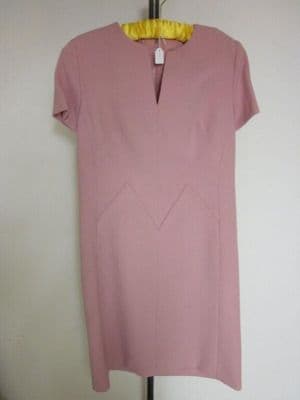
2010s → 1990s · 50yr62%
SHARED
The teal dress's clean A-line and that crisp geometric circle print are pure 1960s mod revival, while the dusty rose shift carries the same DNA but filtered through '90s minimalism—notice how both hit at nearly identical lengths and share that same sleek, collarbone-skimming neckline.
Influences·1960s mod shift dress
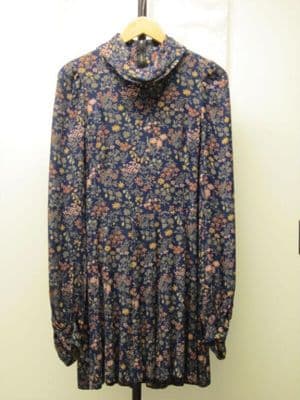
2010s → 1970s · 60yr61%
SHARED
Pull the Thread→
Follow this garment wherever the graph leads