V&A
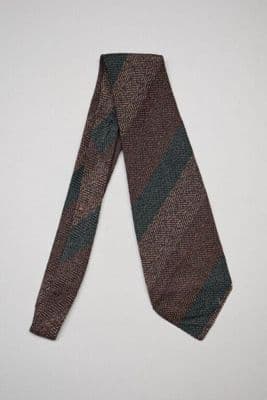
Green and Brown Striped Wool Necktie
1950s · British
Designer
Simpsons
Production
ready-to-wear
Material
wool
Culture
British
Movement
New Look / Post-War
A wool necktie displaying diagonal stripes in brown and dark green. The tie exhibits the standard width typical of 1950s menswear, approximately 3.5 inches at its widest point. The wool fabric appears to have a textured weave, creating subtle surface interest. The diagonal stripe pattern runs at a consistent angle across the tie's length, with alternating bands of earthy brown and forest green. The construction shows clean edges and proper interfacing, indicating quality tailoring. This represents the conservative yet refined aesthetic of post-war British menswear, when wool ties were favored for their durability and understated elegance in professional and casual settings.
tie
Connected To
Worn with·dress shirtWorn with·suit jacketTechnique·machine-weaving
SHAREDcross-culture
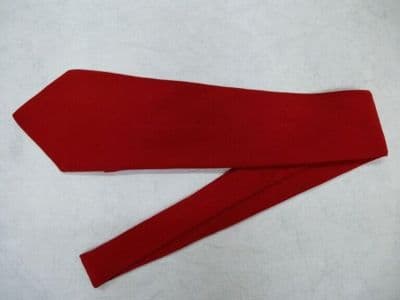
That chunky brown wool tie with its bold green stripes screams postwar British practicality—the kind of thing a Cambridge don would knot while cycling to lecture halls in November drizzle. Two decades later, that skinny red silk number captures the Continental swagger of 1970s Italy, when men started borrowing from women's fashion vocabulary and weren't afraid to look pretty doing it.
Text72%
Image83%
55%
Worn with·dress shirtWorn with·suit jacket
SHAREDcross-culture · cross-category
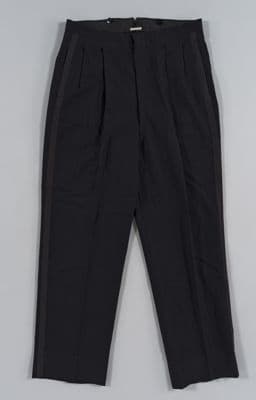
These pieces reveal how menswear's vocabulary of respectability crossed gender lines through pure practicality. The black wool trousers borrow the masculine codes of the 1920s—those knife-sharp pleats, the suspender buttons, the high waist that demands to be seen—transforming utilitarian menswear into a statement of female independence.
Worn with·dress shirtWorn with·suit jacket
SHAREDcross-culture
Text74%
Worn with·dress shirtWorn with·suit jacket
SHAREDcross-culture · cross-category
Text45%
Pull the Thread→
Follow this garment wherever the graph leads