2020s · 2010s · Western
Production
ready-to-wear
Material
wool blend
Culture
Western
Movement
Quiet Luxury
Influences
Victorian white tie tradition · 1930s Hollywood glamour
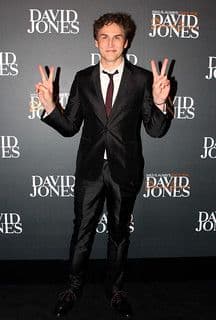
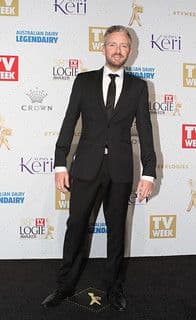
A contemporary black tuxedo featuring a single-breasted dinner jacket with peaked lapels in contrasting black satin. The jacket displays a slim, body-conscious silhouette with a fitted waist and structured shoulders. Paired with matching black trousers featuring a satin stripe down the outer seam. The ensemble includes a crisp white dress shirt with wing collar and white bow tie. The overall construction demonstrates modern tailoring techniques with clean lines and minimal ornamentation, reflecting the understated luxury aesthetic of contemporary formal menswear where quality of cut and fabric takes precedence over decorative elements.


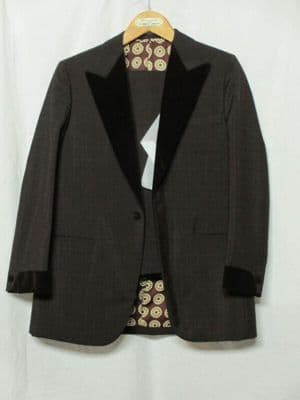
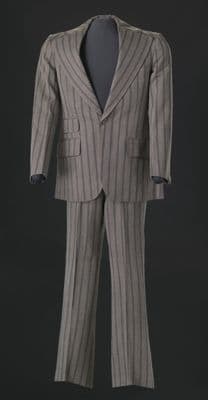
These two jackets reveal how formal menswear's rebellious streak has evolved from textural disruption to structural revolution. The 1970s brown jacket uses slubbed wool and velvet collar trim to soften traditional suiting's hard edges—a gentlemanly subversion that whispers rather than shouts.

Follow this garment wherever the graph leads
Both men are wearing the same fundamental uniform—black dinner jackets with peaked lapels—but their bodies tell different stories about how formal menswear adapts to its wearer. The first jacket, cut with a more generous chest and softer shoulder line, suggests the kind of traditional British tailoring that prioritizes comfort over drama, while the second blazer hugs closer to the torso with a more aggressive taper through the waist.
These two jackets reveal how formal menswear's rebellious streak has evolved from textural disruption to structural revolution. The 1970s brown jacket uses slubbed wool and velvet collar trim to soften traditional suiting's hard edges—a gentlemanly subversion that whispers rather than shouts.
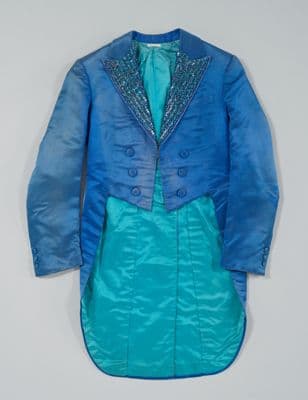
That electric blue tailcoat with its jeweled lapels and shocking turquoise lining is pure theatrical excess—the kind of thing that demands a spotlight and probably came with its own dramaturgy notes. Fast-forward thirty years to that sleek black tuxedo blazer, and you see how formal menswear learned to whisper instead of shout: the silhouette is razor-sharp where the tailcoat was operatic, the proportions body-conscious where the other was grandly architectural.
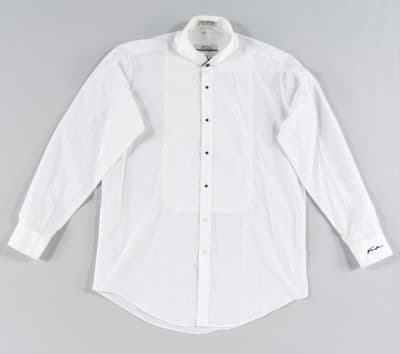
That black tuxedo blazer and white wing-collar shirt represent the eternal marriage of menswear's most codified uniform, separated by decades but bound by the same rigid grammar of black-tie dressing. The blazer's razor-sharp lapels and body-conscious cut show how contemporary tailoring has tightened the silhouette while the shirt's starched wing collar and covered placket preserve the Victorian bones of formal wear—one evolving toward sleekness, the other a monument to tradition.

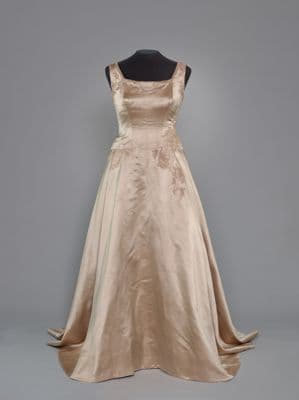
That champagne gown's liquid satin and precise architectural lines channel the same 1930s Hollywood glamour that's been reborn in that razor-sharp tuxedo blazer—both garments understand that true sophistication lies in immaculate tailoring rather than ornament. The gown's sleek bodice and the blazer's knife-edge lapels are separated by nearly a century, but they're speaking the same language of power dressing, where the cut does all the talking.