V&A
Champagne Silk Satin Bias-Cut Evening Gown
Roaring Twenties / Art Deco · 1920s · French
Designer
Madeleine Vionnet
Production
haute couture
Material
silk satin
Culture
French
Movement
Modernist fashion
Influences
bias-cut technique · Greek chiton draping
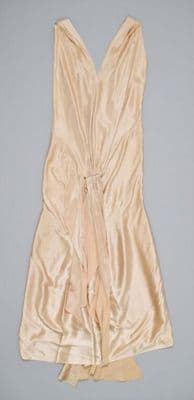
This champagne silk satin evening gown demonstrates the revolutionary bias-cut technique characteristic of late 1920s haute couture. The dress is cut on the diagonal grain, allowing the fabric to cling naturally to the body's curves without structured undergarments. The sleeveless bodice features deep V-shaped necklines both front and back, creating dramatic geometric lines. The skirt flows in a straight column from hip to floor with subtle flaring at the hem. The lustrous satin catches light along the bias grain, creating subtle rippling effects across the surface. This construction represents the period's rejection of corseted silhouettes in favor of fluid, body-conscious designs that celebrated natural feminine form through masterful fabric manipulation.
dressstraightv-neckfloor length
Connected To
Influences·Greek chiton drapingTechnique·draping
SHARED50 years
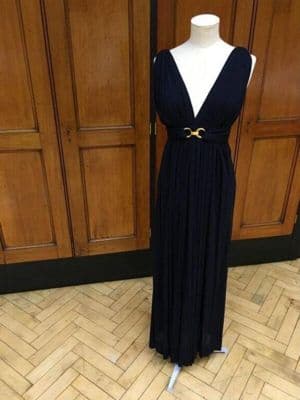
Both dresses trace their lineage to the same revolutionary idea: that a woman's body should move freely beneath fabric, not be imprisoned by it. The 1920s champagne silk falls in those telltale bias-cut rivers that Madeleine Vionnet perfected, while the 1970s navy jersey plunges into a deep V that Halston would have recognized as his own territory—both using drape as architecture.
Pull the Thread→
Follow this garment wherever the graph leads