FASHIONPEDIA
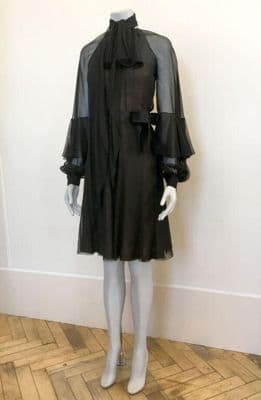
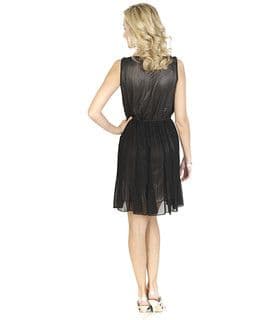
Black Chiffon Fit and Flare Skater Dress
2000s · 2010s · Western
Production
ready-to-wear
Material
chiffon
Culture
Western
Movement
Indie Sleaze
Influences
Christian Dior New Look silhouette
A sleeveless black chiffon dress featuring a fitted bodice that cinches at the natural waist with a thin belt or sash. The skirt portion flares dramatically into a full circle silhouette that falls just above the knee. The lightweight chiffon fabric creates soft movement and draping, while the neckline appears to be a simple scoop or boat neck. The construction emphasizes the New Look silhouette with its defined waist and voluminous skirt, though shortened to a more casual above-knee length. The dress appears to be lined given the opacity of the black fabric, and the overall construction suggests machine-sewn ready-to-wear production typical of 1950s American fashion.
dressfit and flareround neckabove-the-knee
Connected To
Influences·Christian Dior New Look silhouetteWorn with·petticoatFunction·leisure-resort
Echoes Across Time
2000s → 1950s · 60yr65%
SHARED
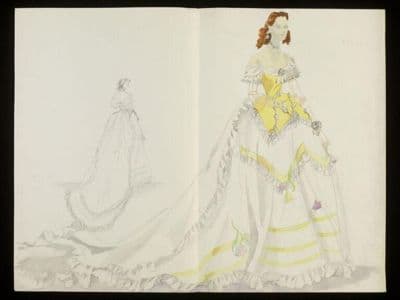
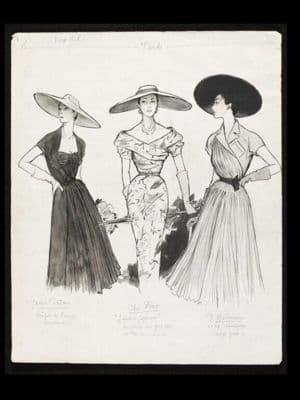
The contemporary chiffon dress carries the ghost of Dior's New Look in its cinched waist and full skirt, but where the 1950s illustration shows crisp structure and ceremonial formality, this modern interpretation dissolves into soft pleats and casual ease. Sixty years have collapsed the gap between garden party propriety and everyday romance—the same silhouette that once required petticoats, gloves, and social occasion now floats free in whisper-weight fabric that moves like air.
Influences·Christian Dior New Look silhouetteWorn with·petticoatFunction·leisure-resort
Pull the Thread→
Follow this garment wherever the graph leads