2010s · 2020s · American
Production
ready-to-wear
Material
ponte knit
Culture
American
Movement
Gorpcore
Influences
1940s utility fashion practicality · Christian Dior New Look silhouette
A high-waisted black pencil skirt in ponte knit fabric that hits just below the knee. The garment features a wide waistband that sits at the natural waist, creating the characteristic hourglass silhouette popular in 1950s fashion. The ponte knit material provides structure while allowing for movement, a practical evolution from the more restrictive fabrics of earlier decades. The skirt's slim, straight cut follows the body's natural lines without excess fabric, embodying the streamlined aesthetic of the Atomic Age. The knee-length hemline represents the era's balance between modesty and modernity, while the high waist emphasizes the fitted bodice typical of 1950s proportions.
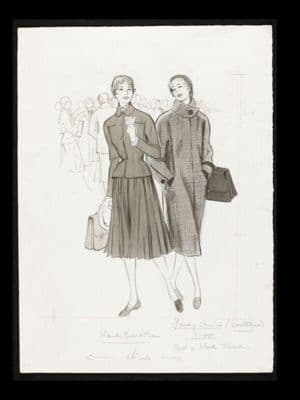
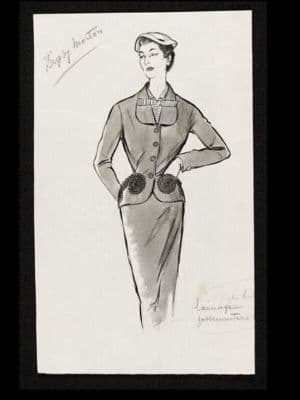
That black pencil skirt pulls its DNA straight from the 1950s suit sketched beside it—both worship at the altar of Dior's New Look, with its obsession over the wasp waist and the hip-skimming silhouette that makes women look like they're balancing on a stem. The modern ponte version strips away the jacket's structured formality but keeps the essential geometry: that high waistband that sits just where a corset would end, creating the same hourglass math that made the original so revolutionary.


That black pencil skirt pulls its DNA straight from the 1950s suit sketched beside it—both worship at the altar of Dior's New Look, with its obsession over the wasp waist and the hip-skimming silhouette that makes women look like they're balancing on a stem. The modern ponte version strips away the jacket's structured formality but keeps the essential geometry: that high waistband that sits just where a corset would end, creating the same hourglass math that made the original so revolutionary.

Follow this garment wherever the graph leads
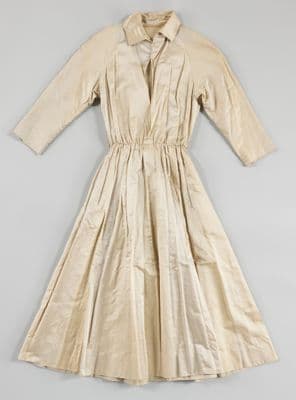
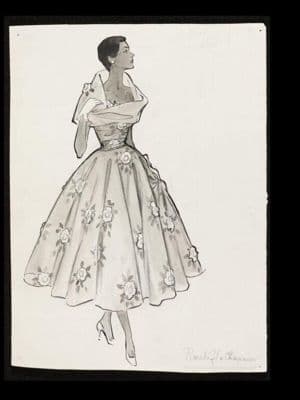
That black pencil skirt is pure New Look DNA, just stripped down to its most potent element—the wasp waist that Dior used to revolutionize women's silhouettes in 1947. The cream dress shows the full vocabulary: the cinched waist, the shirt-style bodice, the way fabric pools and swells from that crucial gathering point at the ribs.
Both garments worship at the altar of Dior's 1947 New Look, but they've chosen different devotional practices. The 1950s cocktail dress embraces the full doctrine—that impossible wasp waist, the voluminous skirt that requires architectural undergarments, the way fabric becomes sculpture. The contemporary pencil skirt is more selective in its faith, taking only the high-waisted, rib-crushing silhouette and stretching it into a second-skin that would have scandalized Christian Dior himself.
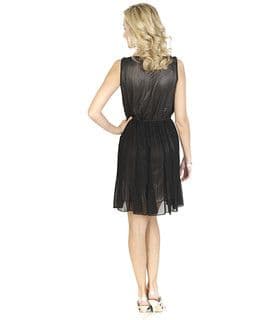
Both garments reach back to Dior's 1947 New Look, but they grab different pieces of that revolutionary silhouette. The ponte pencil skirt takes the wasp waist and hip-hugging line, using stretch fabric to create that body-conscious fit without the original's structured underpinnings. The chiffon dress borrows the cinched waist but flips the bottom half, trading Dior's voluminous A-line for a flirty skater skirt that still requires that telltale petticoat puff.

That black pencil skirt is pure New Look DNA, just stripped down to its most potent element—the wasp waist that Dior used to revolutionize women's silhouettes in 1947. The cream dress shows the full vocabulary: the cinched waist, the shirt-style bodice, the way fabric pools and swells from that crucial gathering point at the ribs.