SMITHSONIAN
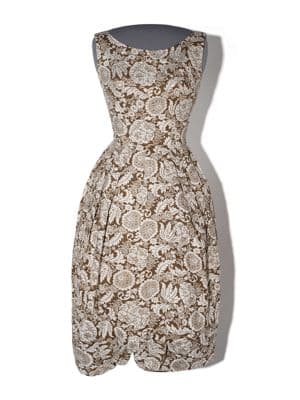
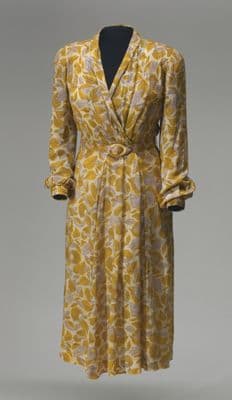
Cotton Feedsack Floral Print Day Dress
1950s · 1950s · American
Production
handmade
Material
cotton feedsack fabric
Culture
American
Movement
New Look / Post-War
Influences
Christian Dior New Look silhouette
A sleeveless day dress constructed from repurposed cotton feedsack fabric featuring an all-over floral print in brown and cream tones. The dress exhibits the characteristic New Look silhouette with a fitted, darted bodice that emphasizes the waist and a full, gathered skirt that falls to mid-calf length. The round neckline is finished with a simple facing, and the armholes are cleanly bound. The floral motifs appear to be roses and foliage in a dense, repeating pattern typical of commercial feedsack designs. This garment represents the resourceful practice of converting grain and feed sacks into clothing during and after World War II, when fabric rationing made new textiles scarce and expensive.
dressfit and flareround neckknee length
Connected To
Influences·Christian Dior New Look silhouetteMovement·New Look / Post-WarWorn with·slip
Echoes Across Time

2000s → 1950s · 60yr57%
SHARED
Both dresses worship at the altar of Dior's New Look, but sixty years apart they reveal how the same silhouette can speak entirely different languages. The 1950s feedsack dress, with its dense botanical print and practical day-dress proportions, carries the original DNA of postwar optimism—feminine curves carved from necessity fabric, making luxury from leftovers.
Influences·Christian Dior New Look silhouette

2000s → 1950s · 60yr56%
Pull the Thread→
Follow this garment wherever the graph leads