1950s · 1950s · French
Designer
Madame Grès
Production
haute couture
Material
silk and wool jersey
Culture
French
Movement
New Look / Post-War
Influences
Ancient Greek chiton draping · 1930s bias-cut techniques
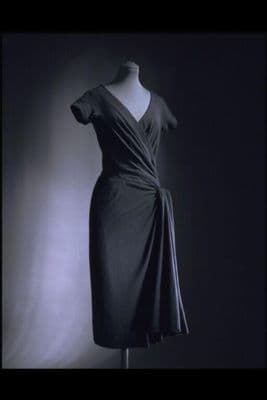
This afternoon dress demonstrates Madame Grès's mastery of jersey draping, featuring a deep V-neckline that wraps across the bodice in classical Greek-inspired folds. The silk and wool jersey fabric falls in controlled pleats from the left shoulder, creating asymmetrical draping that follows the body's natural curves without rigid structure. The dress extends to mid-calf length with a subtle side drape that adds movement. The cap sleeves are formed by the same continuous draping technique, eliminating seams for a fluid silhouette. The charcoal gray color enhances the sculptural quality of the pleating, while the jersey's weight allows the fabric to hold its draped form while maintaining elegant fluidity characteristic of 1950s refined daywear.
Follow this garment wherever the graph leads
These two 1950s dresses reveal how the same silhouette could speak entirely different languages of class and circumstance. The charcoal jersey dress whispers French sophistication through its fluid draping and architectural wrap construction—this is couture technique applied to day wear, where every fold appears effortless but calculated.
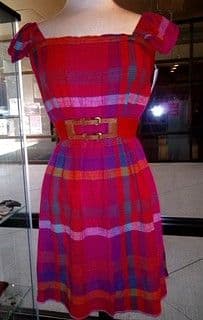
These dresses capture the two faces of 1950s femininity — one all American optimism in candy-bright plaid with its perky bow sleeves and cinched waist, the other embodying French sophistication through that liquid drape and architectural wrap construction. The plaid cotton speaks to postwar abundance and the suburbs, while the gray jersey whispers of Left Bank elegance, yet both worship at the same altar of the defined waist that Dior made gospel.
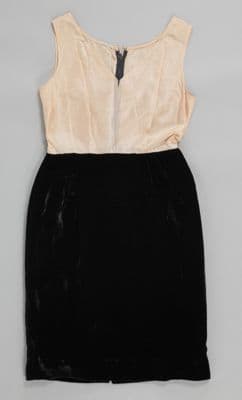
Both dresses speak the language of 1950s restraint, but with entirely different accents. The American piece uses the decade's favorite trick of material contrast—that cream silk bodice against black velvet creates the illusion of a separate blouse and skirt while maintaining the streamlined silhouette Dior made essential.
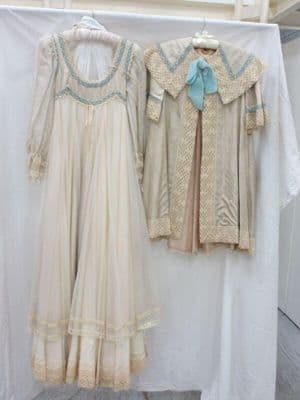
The charcoal wrap dress cuts a severe diagonal across the body with its deep V-neck and side-swept drape, while the cream empire gown floats in gossamer layers beneath its structured redingote—yet both deploy the ancient strategy of the second skin, that extra layer that transforms how fabric meets flesh.