V&A
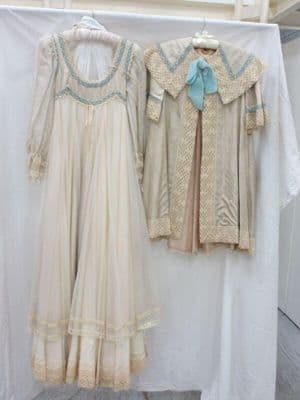
Cream Silk Chiffon Empire Evening Dress with Redingote
1970s · 1970s · British
Designer
Gina Fratini
Production
ready-to-wear
Material
silk chiffon
Culture
British
Movement
Romantic Revival · Hippie / Counterculture
Influences
Edwardian tea gown · Victorian romantic dress
A romantic evening ensemble consisting of a floor-length silk chiffon dress with empire waistline and flowing skirt, paired with a matching redingote coat. The dress features delicate lace trim at the neckline and hem, with long sheer sleeves gathered at the wrists. The accompanying coat displays geometric quilted or embroidered patterns across the fabric surface, with a fitted bodice and flared sleeves. Both pieces showcase the early 1970s revival of Edwardian and Victorian romantic elements, executed in pale, ethereal tones that reflect the era's fascination with historical nostalgia and feminine fantasy dressing.
dressempireround neckfloor length
Connected To
59%
Worn with·undergarmentsTechnique·couture-constructionTechnique·
Echoes Across Time
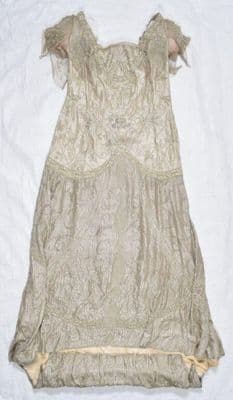
Great Depression → 1970s · 40yr59%
SHARED
These two gowns reveal how British formal wear clung to imperial grandeur even as the empire itself crumbled. The 1930s silver lamé court dress, with its rigid bodice and ceremonial train, represents the last gasps of presentation culture—all that glittering armor and glass pearl embroidery designed to project power when Britain had precious little left.
Worn with·undergarmentsTechnique·couture-constructionTechnique·hand-embroidery
Pull the Thread→
Follow this garment wherever the graph leads