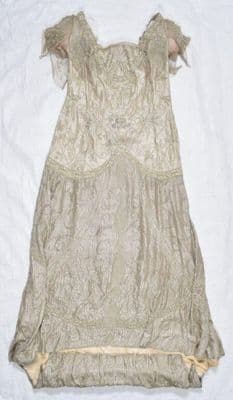
Great Depression · 1930s · British
Production
haute couture
Material
silver lamé
Culture
British
Influences
1930s bias-cut evening wear · Edwardian court train tradition
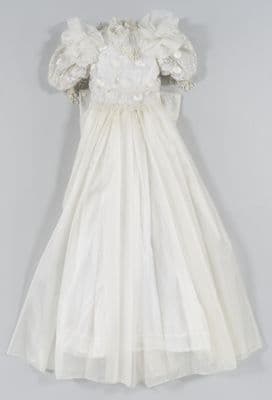
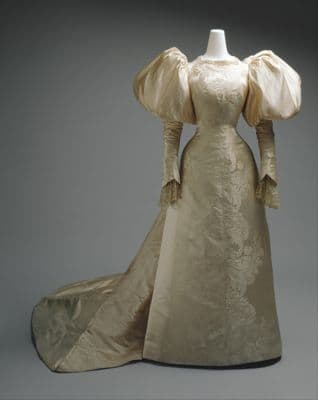
This court presentation gown displays the refined elegance of 1930s formal wear with its fitted bodice featuring delicate off-shoulder cap sleeves and sweetheart neckline. The silver lamé fabric creates a lustrous surface that catches light, while intricate embroidery and glass pearl embellishments add textural richness across the bodice and skirt. The silhouette follows the decade's preference for a natural waistline and graceful A-line skirt that flows to floor length. The construction shows couture-level craftsmanship with careful attention to draping and surface decoration. The gown's formal nature and luxurious materials reflect the continuing tradition of elaborate court dress despite the economic constraints of the Great Depression era.
The blush silk's liquid drape and the silver lamé's bias-cut cling both descend from the 1930s revolution that freed evening wear from rigid corseting, letting fabric follow the body's natural line instead of fighting it. But where the Depression-era gown whispers its luxury through hand-sewn glass pearls and precious metallic thread—a calculated display of wealth during lean times—the contemporary dress shouts confidence through that brazen thigh-high slit and asymmetrical shoulder.


The blush silk's liquid drape and the silver lamé's bias-cut cling both descend from the 1930s revolution that freed evening wear from rigid corseting, letting fabric follow the body's natural line instead of fighting it. But where the Depression-era gown whispers its luxury through hand-sewn glass pearls and precious metallic thread—a calculated display of wealth during lean times—the contemporary dress shouts confidence through that brazen thigh-high slit and asymmetrical shoulder.

Follow this garment wherever the graph leads
These two gowns reveal how British formal wear clung to imperial grandeur even as the empire itself crumbled. The 1930s silver lamé court dress, with its rigid bodice and ceremonial train, represents the last gasps of presentation culture—all that glittering armor and glass pearl embroidery designed to project power when Britain had precious little left.
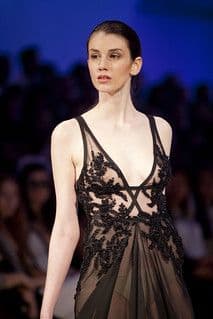
Both dresses understand that true glamour lies in the tension between revelation and concealment, but they achieve it through opposite strategies. The contemporary black lace gown uses transparency as its weapon—that intricate botanical lacework mapping the body beneath like a beautiful secret partially told—while the 1930s silver lamé court dress deploys opacity and weight, its metallic surface catching light like armor made for dancing.
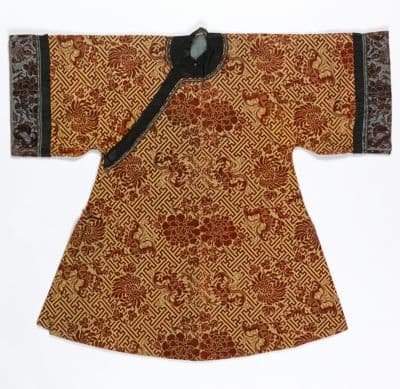
These two garments reveal how luxury announces itself through surface richness, whether in the Depression-era lamé gown's shimmering metallic weave or the Chinese robe's dense geometric brocade that catches light like hammered metal. Both rely on textile as theater—the gown's glass pearls and the robe's intricate woven patterns create visual weight that transforms the wearer into a walking artwork.

These two gowns reveal how British formal wear clung to imperial grandeur even as the empire itself crumbled. The 1930s silver lamé court dress, with its rigid bodice and ceremonial train, represents the last gasps of presentation culture—all that glittering armor and glass pearl embroidery designed to project power when Britain had precious little left.