Roaring Twenties / Art Deco · 1940s · American
Production
handmade
Material
silk satin
Culture
American
Movement
Art Deco
Influences
1930s bias-cut evening wear · Art Deco beading patterns
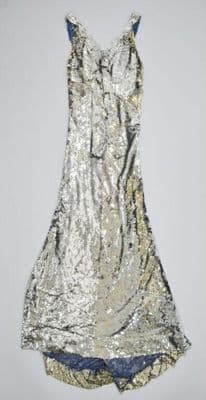
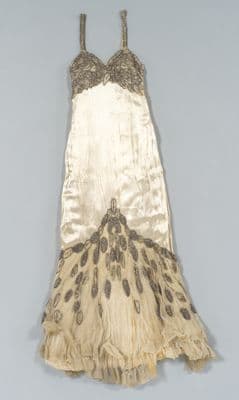
This cream-colored evening gown features a fitted bodice with thin straps and extensive beadwork in geometric and floral patterns across the bust area. The dress transitions from a sleek, body-hugging silhouette through the torso to a dramatic flared train at the hem. Bronze and gold beading creates intricate motifs that cascade down the lower portion of the skirt in vertical arrangements. The train extends significantly behind the wearer, creating a mermaid-like silhouette. The beadwork appears to be hand-applied in dense clusters, with particular concentration at the bust and scattered decorative elements throughout the skirt portion.


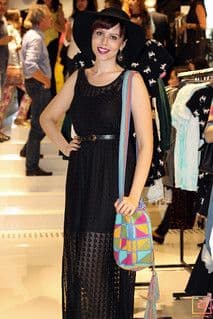
The 1920s gown's beaded bodice and dramatic mermaid silhouette speak the same Art Deco language as the modern dress's geometric cutouts and dropped waistline, but where the vintage piece whispers luxury through hand-sewn embellishment and liquid satin, the contemporary version shouts accessibility through machine-knit texture and ready-to-wear proportions.


Follow this garment wherever the graph leads
These two gowns speak the same glittering language of Art Deco eveningwear, but with a decade's worth of economic reality between them. The earlier cream satin piece luxuriates in its materials—that heavy silk pooling into a dramatic train, beadwork cascading like water down the fitted bodice—while the later silver sequined number achieves similar glamour through clever illusion, using lightweight tulle and strategic sparkle to create impact without the expense.
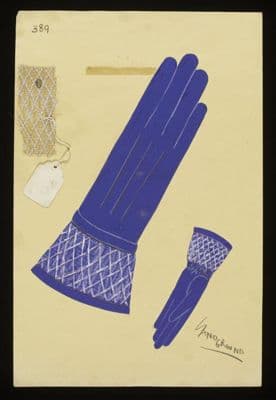
The cream gown's cascading beadwork and the royal blue gloves' diamond-lattice embroidery are both children of the same Art Deco obsession with geometric precision—one pooling into a mermaid's tail of metallic scales, the other climbing up the arm in crisp chevrons. Ten years and an ocean apart, they reveal how the movement's angular vocabulary traveled from America's jazz-age ballrooms to Britain's more restrained Depression-era elegance.
The 1920s gown's beaded bodice and dramatic mermaid silhouette speak the same Art Deco language as the modern dress's geometric cutouts and dropped waistline, but where the vintage piece whispers luxury through hand-sewn embellishment and liquid satin, the contemporary version shouts accessibility through machine-knit texture and ready-to-wear proportions.
Both dresses speak the angular language of Art Deco, but across nearly a century of translation. The 1920s gown commits fully to the movement's geometric gospel—those metallic beads trace sharp zigzags and stylized florals down the cream silk like architectural blueprints, while the mermaid silhouette pools into pleated drama.