V&A
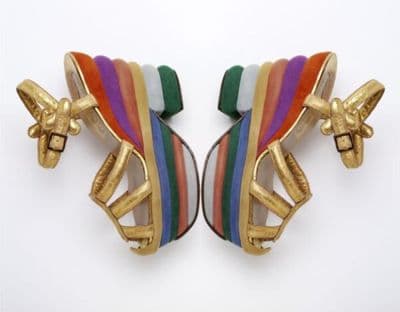
Multicolored Suede Cork Platform Sandals
Great Depression · 1930s · Italian
Designer
Salvatore Ferragamo
Production
artisan-craft
Material
suede-covered cork
Culture
Italian
Movement
Art Deco
Influences
cork material innovation due to wartime shortages · Art Deco geometric patterning
These platform sandals feature dramatic cork soles covered in multicolored suede strips arranged in rainbow sequence from orange through purple, blue, green, and yellow. The substantial platform sole rises approximately 4-5 inches at the heel with a thick wedge construction. Gold leather straps form an intricate geometric pattern across the foot with ankle buckle closure. The innovative use of cork as a sole material reflects wartime material shortages, while the bold color blocking and sculptural platform height demonstrate Ferragamo's experimental approach to footwear construction during the late 1930s.
shoe
Connected To
Designer·Salvatore Ferragamo
SHARED80 years · cross-category
These pieces reveal Ferragamo's genius for turning scarcity into luxury across eight decades. The 1930s platforms transform wartime cork rationing into a rainbow-striped sculpture that makes feet look like they're floating on a paintbox, while the '90s blouse spins actual orange fiber—extracted from citrus waste—into geometric silk that catches light like stained glass.
Text
Influences·Art Deco geometric patterning
SHARED50 years · cross-culture · cross-category
These pieces speak the same visual language across five decades: bold, radiating geometry that transforms the wearer into a walking art object. The Depression-era platforms stack rainbow suede in precise bands that echo the same centrifugal energy as the scarf's kaleidoscopic Medusa medallion, where serpentine hair spirals outward in hypnotic symmetry.
Text
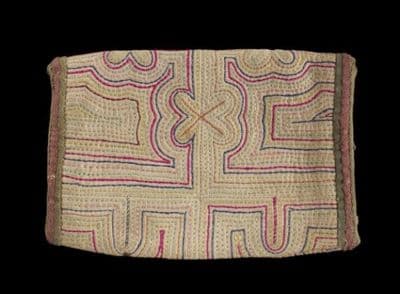
Influences·Art Deco geometric patterning
SHARED10 years · cross-culture · cross-category
These pieces speak the same geometric language across a decade and an ocean. The Korean pouch's maze-like quilting pattern—those interlocking rectangles and stepped borders in pink thread—echoes the same Art Deco sensibility that would later surface in those Italian platform sandals, where rainbow suede stripes march across cork wedges in rigid, architectural bands.
Text
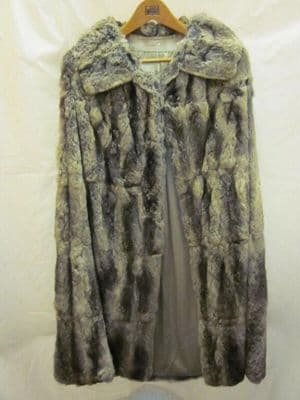
Movement·Art DecoTechnique·leather-working
SHARED10 years · cross-culture · cross-category
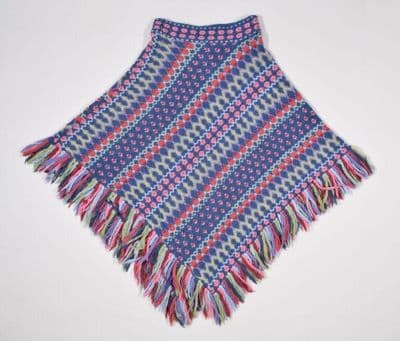
These pieces capture the Art Deco era's obsession with geometric spectacle, though they land on opposite sides of the economic crash that split the movement in two. The sandals' rainbow-striped cork wedges echo the same bold, stepped geometries that define the cape's dramatic triangular silhouette—both pieces built from stacked, architectural forms that announce themselves from across a room.
Echoes Across Time
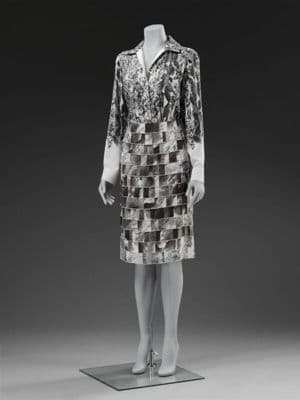
Great Depression → 1990s · 80yr70%
SHARED
These pieces reveal Ferragamo's genius for turning scarcity into luxury across eight decades. The 1930s platforms transform wartime cork rationing into a rainbow-striped sculpture that makes feet look like they're floating on a paintbox, while the '90s blouse spins actual orange fiber—extracted from citrus waste—into geometric silk that catches light like stained glass.
Designer·Salvatore Ferragamo
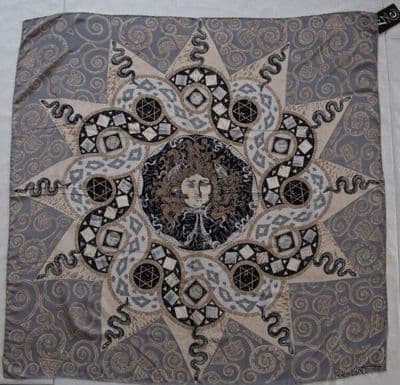
Great Depression → 1980s · 50yr66%
Pull the Thread→
Follow this garment wherever the graph leads