V&A
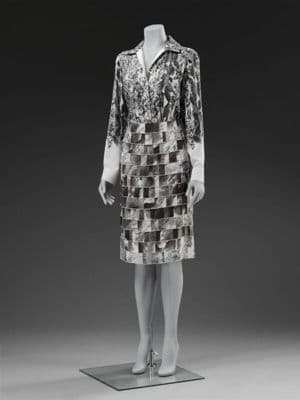
Orange Fiber Silk Geometric Print Blouse
1990s · 2010s · Italian
Designer
Salvatore Ferragamo
Production
ready-to-wear
Material
orange fiber and silk blend
Culture
Italian
Movement
Sustainable Fashion · Minimalism
Influences
1960s geometric op-art · contemporary sustainable fashion
A long-sleeved blouse featuring a striking geometric pattern that transitions from an organic, possibly floral or abstract motif in the upper bodice to a bold checkerboard pattern in the lower section and skirt portion. The garment appears to be constructed as a shirt-dress or tunic with a structured collar and button-front closure. The fabric demonstrates innovative textile technology, combining orange fiber with silk to create a smooth, lustrous surface. The geometric lower section shows precise registration of black and white squares, suggesting advanced printing or weaving techniques. The silhouette is contemporary and minimalist, with clean lines that reflect modern Italian design sensibilities focused on material innovation and subtle luxury.
shirt/blouseregular fitv-neckhip length
Connected To
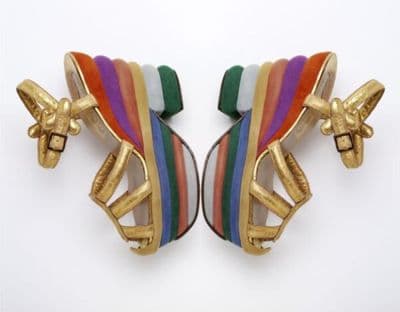
Designer·Salvatore Ferragamo
SHARED80 years · cross-category
These pieces reveal Ferragamo's genius for turning scarcity into luxury across eight decades. The 1930s platforms transform wartime cork rationing into a rainbow-striped sculpture that makes feet look like they're floating on a paintbox, while the '90s blouse spins actual orange fiber—extracted from citrus waste—into geometric silk that catches light like stained glass.
Pull the Thread→
Follow this garment wherever the graph leads