SMITHSONIAN
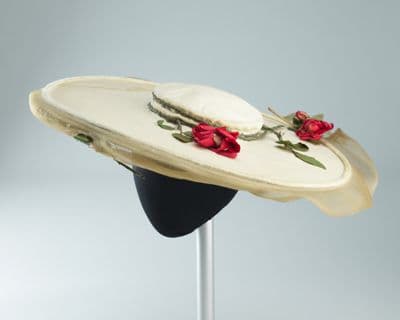
Cream Wide-Brim Hat with Red Fabric Roses
1950s · 1950s · American
Production
ready-to-wear
Material
synthetic faille
Culture
American
Movement
New Look · New Look / Post-War
Influences
Christian Dior New Look millinery · 1950s picture hat tradition
A structured wide-brimmed hat in cream-colored synthetic faille featuring an asymmetrical arrangement of red fabric roses with green foliage. The brim extends approximately 4-5 inches from the crown, creating the dramatic silhouette characteristic of 1950s millinery. The crown appears to have a shallow, rounded shape typical of the era's feminine aesthetic. The floral decoration is positioned strategically on one side of the brim, creating visual interest and movement. The synthetic faille fabric shows a subtle sheen and structured drape that holds the brim's shape. This style reflects the post-war return to elaborate feminine accessories that complemented the New Look's emphasis on refined, ladylike presentation for formal daywear occasions.
hatwide
Connected To
Movement·New LookMovement·New Look / Post-War
SHAREDsame era · cross-culture · cross-category
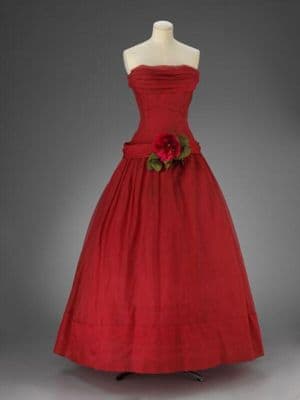
These pieces speak the same 1950s language of romantic femininity, where flowers weren't just decoration but declarations of intent. The gown's single fabric rose at the hip and the hat's scattered blooms both emerge from that post-war hunger for beauty after years of rationing—but where the French ballgown deploys its rose as punctuation on yards of crimson silk, the American hat makes flowers the entire conversation, clustering them like a garden party across cream faille.

Pull the Thread→
Follow this garment wherever the graph leads