1950s · 1940s · English
Designer
Molyneux
Production
haute couture
Material
ivory silk moire
Culture
English
Movement
New Look · New Look / Post-War
Influences
Christian Dior New Look silhouette · Victorian portrait neckline
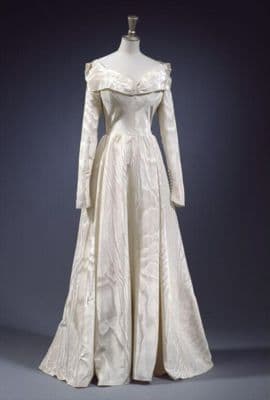
This 1948 wedding gown exemplifies the New Look silhouette with its dramatically fitted bodice and voluminous floor-length skirt. The ivory silk moire fabric creates a lustrous ribbed texture that catches light beautifully. The off-shoulder neckline features a wide portrait collar that frames the décolletage, while long fitted sleeves extend to the wrists. The bodice is precisely tailored to create an hourglass silhouette, emphasizing the waist before the skirt expands into generous folds. The full skirt appears to be supported by substantial understructure, creating the characteristic New Look volume that marked fashion's return to luxury and femininity after wartime austerity. The construction demonstrates couture-level craftsmanship typical of Molyneux's house.


Both dresses worship at the altar of Dior's New Look, but from different pews entirely. The 1950s ivory silk wedding gown is pure cathedral reverence—that off-the-shoulder portrait neckline and full skirt speak the original language of post-war femininity that Dior invented in 1947.


Follow this garment wherever the graph leads

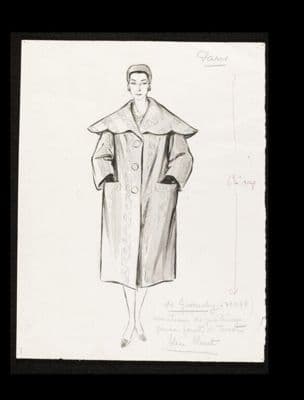
That dramatic cape collar on the coat and the off-shoulder portrait neckline of the wedding gown both spring from Dior's New Look obsession with transforming women into living sculptures — notice how each garment creates an architectural frame around the face and shoulders that's almost theatrical in its grandeur.
That charcoal net hat, with its spiraling layers building like geological sediment, and this ivory silk moire gown both emerge from the same 1950s obsession with architectural volume that Dior unleashed with his New Look.
Both dresses worship at the altar of Dior's New Look, but from different pews entirely. The 1950s ivory silk wedding gown is pure cathedral reverence—that off-the-shoulder portrait neckline and full skirt speak the original language of post-war femininity that Dior invented in 1947.
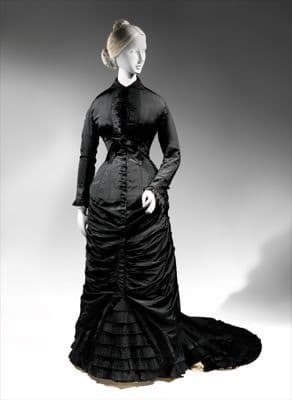
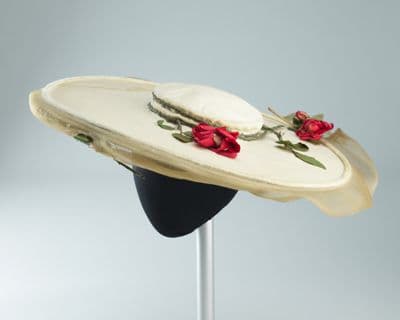
That 1950s wedding gown with its sweeping train and the wide-brimmed hat crowned with silk roses are both drunk on the same post-war fantasy—romance as antidote to rationing. The dress pours yards of precious ivory moire into a silhouette that demands space and ceremony, while the hat frames the face like a picture window, those crimson roses blooming against cream faille like lipstick on porcelain.