THE MET
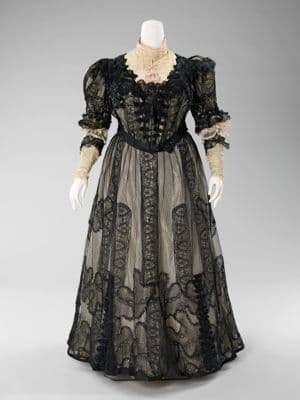
Black Silk Mourning Ensemble with Lace Overlay
Victorian Late / Bustle · 1890s · American
Production
handmade
Material
silk with black lace overlay
Culture
American
Influences
Victorian mourning protocols · French lace techniques
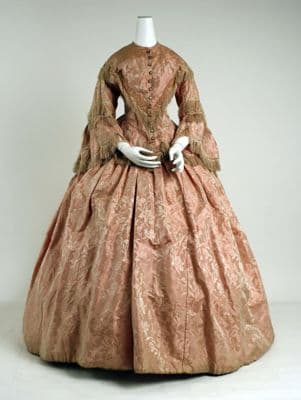
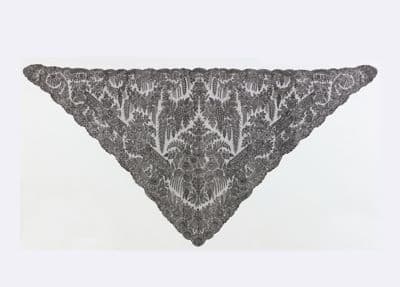
A formal Victorian mourning ensemble featuring a fitted black bodice with extensive black lace overlay creating intricate floral patterns. The bodice displays characteristic 1880s construction with a high neckline, long fitted sleeves with lace cuffs, and front-lacing closure. The full-length skirt shows the transitional silhouette of the late bustle period, with decorative lace panels arranged vertically down the front and around the hem. The black lace creates dimensional texture against the underlying silk, with elaborate scrolling and botanical motifs typical of mourning dress ornamentation. The ensemble demonstrates the Victorian practice of elaborate mourning attire that maintained fashionable silhouettes while adhering to strict color and material protocols.
dressfit and flaresquare necklinefloor length
Connected To
Worn with·bustle padWorn with·chemiseWorn with·corset
Echoes Across Time
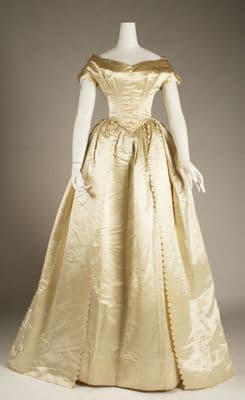
Victorian Late / Bustle → Romantic · 60yr58%
SHARED
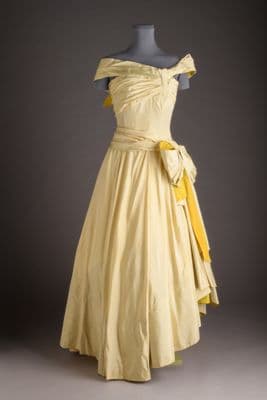
These two gowns reveal how the same architectural bones could carry completely opposite emotional weight in 19th-century America. The black mourning dress and pale gold wedding gown share that distinctive off-shoulder bertha collar that frames the décolletage like a picture frame, along with the same tightly fitted bodice that transforms into a full, ground-sweeping skirt.
Worn with·chemiseWorn with·corsetWorn with·petticoat
Pull the Thread→
Follow this garment wherever the graph leads