THE MET
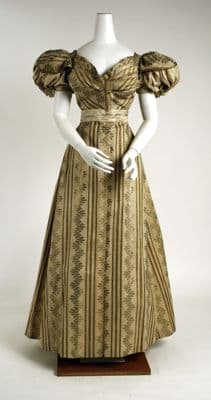
Olive Green Silk Brocade Bustle Ball Gown
Victorian Late / Bustle · 1890s · British
Production
haute couture
Material
silk brocade
Culture
British
Influences
1880s bustle silhouette · Renaissance court dress inspiration
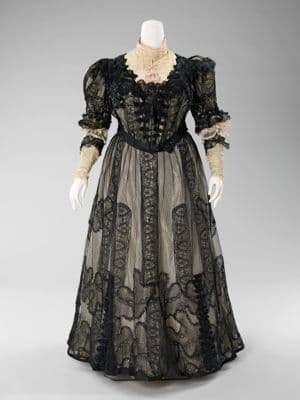
This elaborate ball gown features a fitted bodice with dramatically puffed sleeves that gather at the shoulders and taper to the wrists. The off-shoulder neckline creates a wide horizontal emphasis typical of 1880s formal wear. The olive green silk brocade displays vertical gold striping with repeating floral or geometric motifs woven throughout. The bodice appears boned and structured, creating a narrow waist that extends into a full-length skirt with subtle train. The skirt's silhouette suggests internal bustle support, creating the characteristic projection at the back. The rich brocade fabric has substantial weight and body, allowing the garment to maintain its sculptural form. Construction details include what appears to be self-fabric trim and careful pattern matching at seams.
dressfit and flaresweetheartfloor length
Connected To
Influences·1880s bustle silhouetteWorn with·bustle padWorn with·chemise
Echoes Across Time
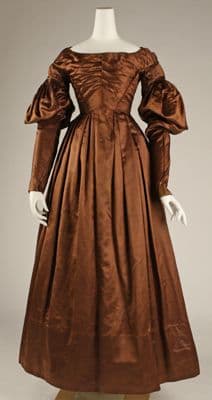
Victorian Late / Bustle → Romantic · 60yr62%
SHARED
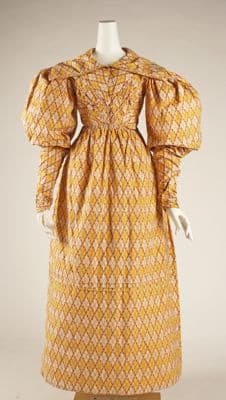
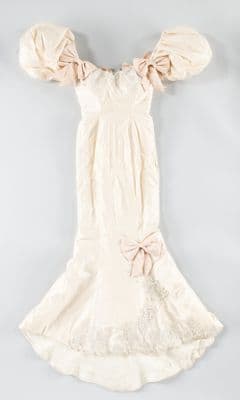
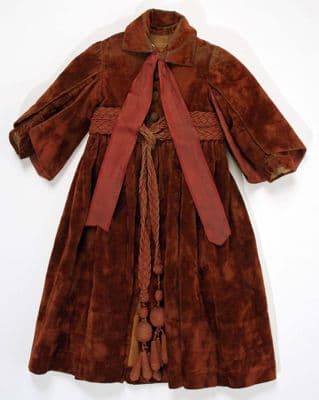
These two gowns speak the same language of theatrical femininity, separated by decades but united in their devotion to the sculptural sleeve. The Victorian olive brocade deploys those enormous puffed sleeves like architectural statements, while the bronze taffeta's sleeves billow with equal drama but softer intention—both understanding that a woman's entrance should announce itself from across a ballroom.
Worn with·chemiseWorn with·corsetWorn with·petticoat
Pull the Thread→
Follow this garment wherever the graph leads