V&A
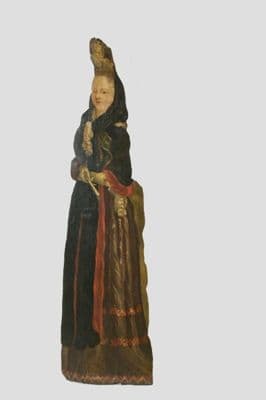
Dark Green Silk Gown with Fontange Headdress
Baroque · 1700s · British
Production
handmade
Material
silk
Culture
British
Influences
French court fashion · fontange headdress style
This dummy board depicts a woman in late 17th century formal attire featuring the characteristic fontange headdress - a tall, structured wire framework supporting pleated linen or lace that rises dramatically from the head. She wears a dark green silk gown with a fitted bodice and full skirt typical of Baroque court fashion. The bodice appears to have decorative trim or embroidery in golden tones, with red accents visible at the waist or sleeve areas. The silhouette shows the narrow-waisted, full-skirted proportions achieved through corseting and structured undergarments. The fontange headdress, named after the Duchess of Fontanges, was fashionable among aristocratic women in the 1680s-1700s and represents the period's taste for elaborate, towering coiffures that emphasized vertical height and formal grandeur.
dressfit and flaresquare necklinefloor length
Connected To
Influences·French court fashionWorn with·chemiseFunction·court-formal
Echoes Across Time
Rococo → Baroque · 60yr65%
SHARED
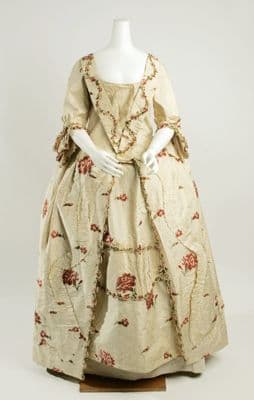
The pale green sack-back gown's languid drape and scattered rose motifs speak the same French court language as the earlier dark green silk, but with the relaxed confidence that comes from sixty years of evolution. Where the Baroque gown grips the torso in rigid formality—notice how that towering fontange headdress demands perfect posture—the later Rococo piece lets fabric flow from the shoulders in those signature Watteau pleats, turning structure into poetry.
Influences·French court fashionWorn with·chemiseFunction·court-formal
Pull the Thread→
Follow this garment wherever the graph leads