Rococo · 1750s · French
Production
handmade
Material
silk brocade
Culture
French
Influences
Rococo decorative arts · French court fashion
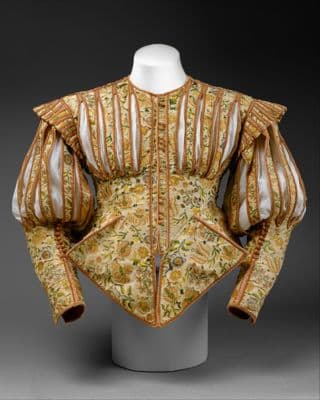
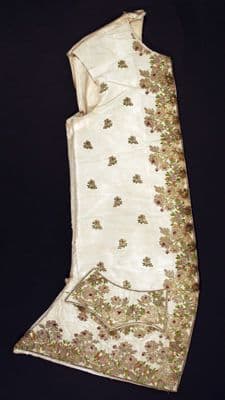
This mid-18th century gentleman's waistcoat displays the characteristic Rococo aesthetic with its cream silk ground decorated with scattered floral motifs in gold and green. The garment features a fitted silhouette that would have extended to hip length, with a standing collar and what appears to be a front button closure. The textile shows a delicate all-over pattern of small botanical elements, likely roses or similar flowers, distributed across the fabric surface. The hem and edges are embellished with elaborate gold metallic embroidery or brocade work featuring dense floral scrollwork. This type of waistcoat would have been worn as part of a three-piece suit with matching or coordinating coat and breeches, representing the height of masculine fashion refinement during the Rococo period.


These two court garments reveal how French brocade weavers maintained their supremacy across centuries by adapting the same luxurious vocabulary to shifting silhouettes. The earlier doublet's dense, all-over floral tapestry and structured torso give way to the waistcoat's more restrained scattered motifs and longer line, but both deploy that signature French trick of using gold thread to make silk shimmer like jewelry.
Follow this garment wherever the graph leads
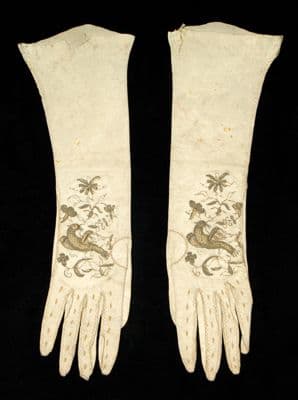
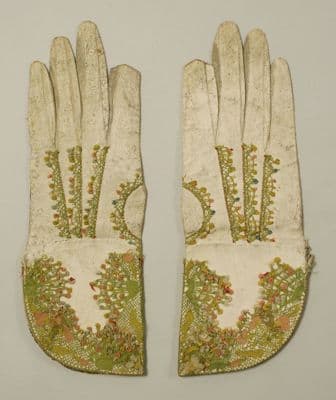
These two pieces speak the same decorative language of 18th-century refinement, where every surface was an opportunity for delicate ornament. The gloves' embroidered florals climbing up from the cuffs echo the scattered blooms across the waistcoat's cream silk ground—both deploy that Rococo trick of making nature look artfully tamed through metallic threads and careful spacing.
These two court garments reveal how French brocade weavers maintained their supremacy across centuries by adapting the same luxurious vocabulary to shifting silhouettes. The earlier doublet's dense, all-over floral tapestry and structured torso give way to the waistcoat's more restrained scattered motifs and longer line, but both deploy that signature French trick of using gold thread to make silk shimmer like jewelry.
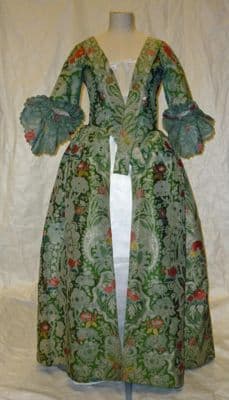
These two pieces reveal how French silk brocade became the lingua franca of 18th-century elite fashion, traveling from Spitalfields looms to aristocratic wardrobes across Europe. The waistcoat's delicate scattered motifs—those tiny repeated florals dancing across cream silk—represent the restrained English interpretation of Rococo excess, while the open robe's bold botanical sprawl shows the French original at full throttle, with roses and leaves cascading down the skirt in painterly profusion.
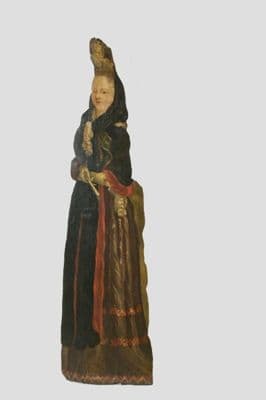
The cream waistcoat's scattered golden blooms and the dark gown's elaborate fontange headdress both speak the language of French court excess, though separated by fifty years of evolving taste. Where the earlier gown announces status through architectural drama—that towering lace confection defying gravity—the waistcoat whispers luxury through meticulous repetition, each tiny floral motif hand-worked across silk that would have cost a year's wages.


The cream waistcoat's scattered golden blooms and the dark gown's elaborate fontange headdress both speak the language of French court excess, though separated by fifty years of evolving taste. Where the earlier gown announces status through architectural drama—that towering lace confection defying gravity—the waistcoat whispers luxury through meticulous repetition, each tiny floral motif hand-worked across silk that would have cost a year's wages.