V&A
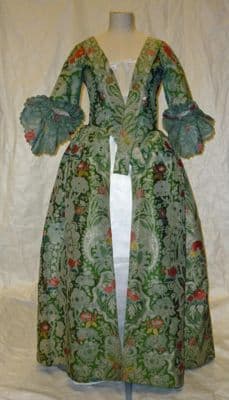
Green Silk Brocade Open Robe Gown
Rococo · 1770s · English
Production
handmade
Material
silk brocade
Culture
English
Influences
Spitalfields silk weaving tradition · French court fashion
This open robe gown features a fitted bodice with deep V-neckline and three-quarter sleeves ending in turned-back cuffs. The sage green silk brocade displays an elaborate pattern of large-scale floral motifs in coral, pink, and cream tones scattered across the surface. The gown opens completely down the front, designed to be worn over a separate stomacher and petticoat. The bodice is closely fitted through the torso, extending into long skirt panels that would drape over side hoops. The textile shows the sophisticated Spitalfields weaving technique with raised brocaded flowers creating textural depth. The sleeve construction and overall silhouette reflect the transitional period between Rococo excess and emerging neoclassical restraint.
dressfit and flaresquare necklinefloor length
Connected To
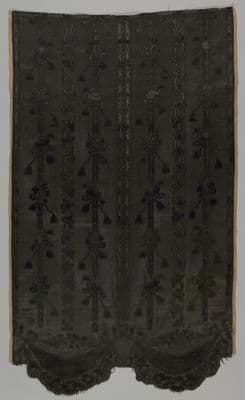
Influences·French court fashionWorn with·chemiseWorn with·staysFunction·court-formal
Echoes Across Time
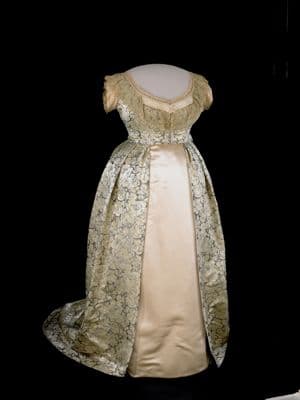
Victorian Late / Bustle → Rococo · 100yr63%
SHARED
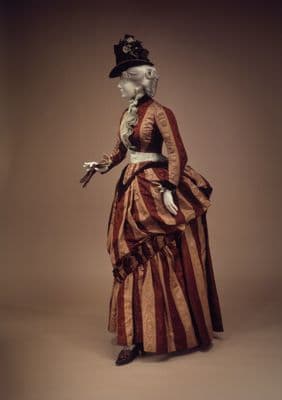
These two gowns reveal how the Victorians ransacked the 18th century for inspiration, but couldn't resist improving on it. The earlier English robe flows in unbroken lines from shoulder to floor, its green silk brocade allowed to speak for itself in that confident rococo way, while the later American dress chops up all that fluidity with a fitted bodice, defined waist, and bustled silhouette that screams 1870s propriety.
Worn with·chemiseWorn with·petticoatTechnique·brocade-weaving
Pull the Thread→
Follow this garment wherever the graph leads