SMITHSONIAN
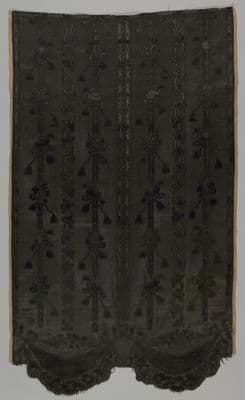
Dark Green Silk Velvet Skirt Panel
Rococo · 1770s · Spanish
Production
handmade
Material
silk velvet
Culture
Spanish
Influences
French court fashion · Baroque textile traditions
This Spanish silk velvet skirt panel displays the characteristic opulence of Rococo textile design. The deep green velvet ground features an intricate pattern of stylized floral motifs arranged in vertical columns, created through cut velvet technique that contrasts pile heights. The lower edge shows elaborate scalloped borders with dense floral clusters, typical of 18th-century Spanish court dress. The velvet's lustrous surface would have caught candlelight dramatically, while the substantial weight and structured construction indicate this was part of a formal gown's petticoat or underskirt system, designed to create the period's desired bell-shaped silhouette.
skirta-linefloor length
Connected To
Influences·French court fashionWorn with·chemiseWorn with·staysFunction·court-formal
Influences·French court fashionWorn with·chemiseWorn with·staysFunction·court-formal
Influences·French court fashionWorn with·chemiseWorn with·staysFunction·court-formal
Influences·French court fashionFunction·court-formal
SHARED20 years · cross-culture · cross-category
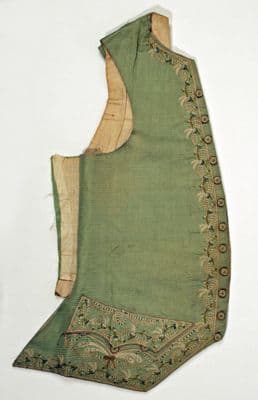
These two pieces reveal how rococo's obsession with botanical ornament crossed both gender lines and national borders in the mid-18th century. The Spanish skirt panel's dark velvet carries the same sinuous floral motifs that dance along the waistcoat's sage silk borders—both speaking the international language of French court style, where nature was tamed into decorative submission.
Echoes Across Time
Rococo → Baroque · 70yr72%
SHARED
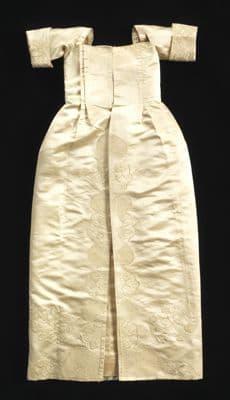
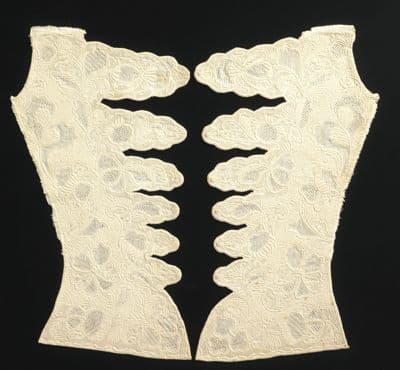
These two garments speak the same ornamental language across a century of European court fashion, though one whispers in thread and the other shouts in silk. The baroque bodice fronts deploy whitework embroidery like architectural molding—those serpentine curves and botanical flourishes that would later explode into the rococo's obsession with asymmetrical nature motifs, here rendered in the Spanish skirt's dark velvet with its cascading floral vines.
Influences·French court fashionWorn with·chemiseWorn with·stays
Pull the Thread→
Follow this garment wherever the graph leads