Baroque · 1700s · European
Production
handmade
Material
linen
Culture
European
Influences
French court fashion · whitework embroidery tradition
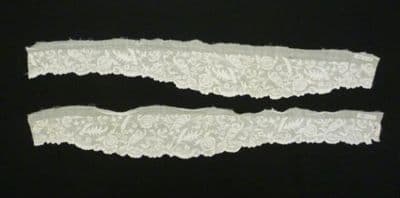
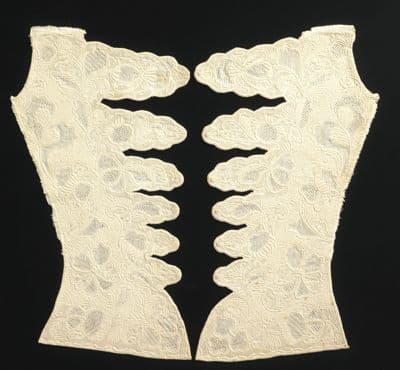
Two matching bodice front panels constructed from cream-colored linen with elaborate whitework embroidery. The panels feature scalloped edges along the center front opening with multiple decorative tabs or points extending inward. The surface is densely covered with floral and scrolling vine motifs executed in white thread, creating a tone-on-tone effect typical of 18th-century needlework. The embroidery appears to be padded or raised in areas, suggesting techniques like French knots or seed stitching. These panels would have been sewn into a complete bodice as part of a formal gown, with the decorative fronts creating visual interest at the garment's most prominent area.


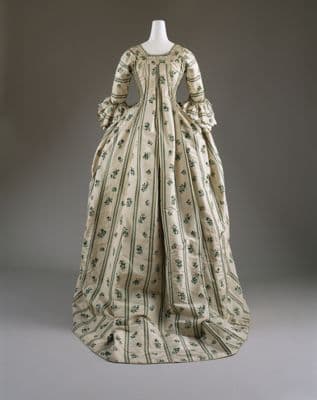
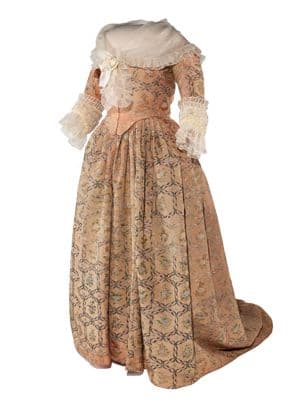
These two pieces reveal how 18th-century European fashion was obsessed with surface decoration as a mark of status, whether through costly silk brocade or painstaking needlework. The French robe's delicate floral sprigs scattered across pale green silk and the bodice fronts' intricate whitework embroidery both transform plain ground fabric into something precious through repetitive, time-intensive ornament.
Follow this garment wherever the graph leads
These two pieces reveal how 18th-century European fashion was obsessed with surface decoration as a mark of status, whether through costly silk brocade or painstaking needlework. The French robe's delicate floral sprigs scattered across pale green silk and the bodice fronts' intricate whitework embroidery both transform plain ground fabric into something precious through repetitive, time-intensive ornament.
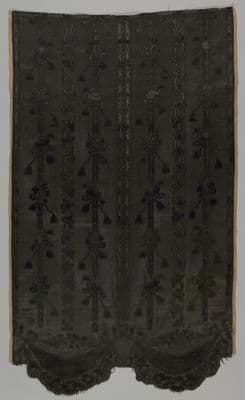
These two garments speak the same ornamental language across a century of European court fashion, though one whispers in thread and the other shouts in silk. The baroque bodice fronts deploy whitework embroidery like architectural molding—those serpentine curves and botanical flourishes that would later explode into the rococo's obsession with asymmetrical nature motifs, here rendered in the Spanish skirt's dark velvet with its cascading floral vines.
These pieces reveal how embroidery migrated from structural necessity to pure ornament across the 18th century's shifting codes of luxury. The baroque bodice fronts deploy their whitework like armor—dense, protective scrollwork that reinforces the garment's job of containing and shaping the female form.
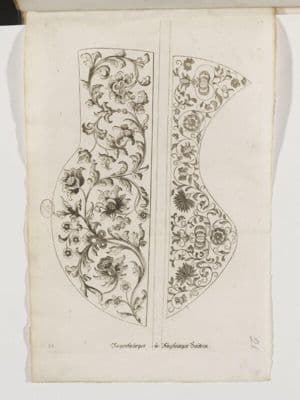
These pieces reveal how embroidery patterns migrated from engraver's studio to seamstress's workbasket across 18th-century Europe. The German engraving maps out the same spiraling vine motifs that bloom across the bodice fronts in actual thread—both deploy that characteristic Rococo vocabulary of curling tendrils and scattered blooms, but one exists as blueprint while the other transforms into wearable luxury.


These two garments speak the same ornamental language across a century of European court fashion, though one whispers in thread and the other shouts in silk. The baroque bodice fronts deploy whitework embroidery like architectural molding—those serpentine curves and botanical flourishes that would later explode into the rococo's obsession with asymmetrical nature motifs, here rendered in the Spanish skirt's dark velvet with its cascading floral vines.