Rococo · 1760s · French
Production
handmade
Material
silk brocade
Culture
French
Influences
Watteau back pleating · French court fashion
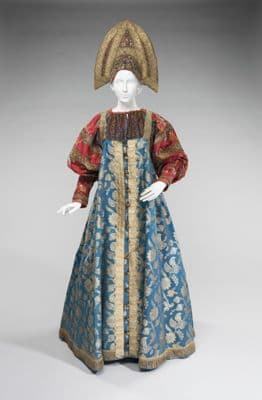
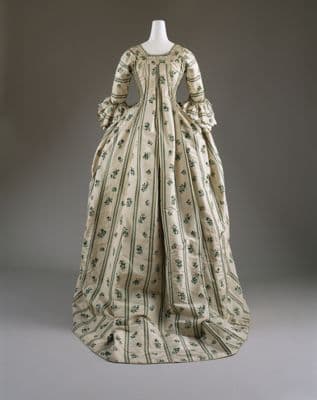
This robe à la française displays the characteristic silhouette of mid-18th century formal dress with a tightly fitted bodice that extends into flowing Watteau pleats cascading from the shoulders to form a dramatic train. The silk fabric features a delicate all-over pattern of small floral motifs in gold on a pale green ground, arranged in vertical stripes. The three-quarter sleeves end in deep ruffled engageantes, while the square neckline is trimmed with matching fabric. The skirt opens in front to reveal a coordinating petticoat, and the entire garment demonstrates the period's preference for luxurious materials and elaborate construction techniques that required extensive underpinnings to achieve the proper silhouette.


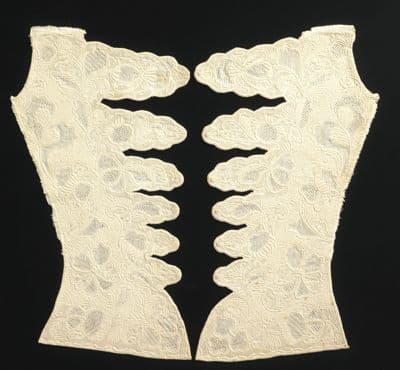
These two pieces reveal how 18th-century European fashion was obsessed with surface decoration as a mark of status, whether through costly silk brocade or painstaking needlework. The French robe's delicate floral sprigs scattered across pale green silk and the bodice fronts' intricate whitework embroidery both transform plain ground fabric into something precious through repetitive, time-intensive ornament.
Follow this garment wherever the graph leads
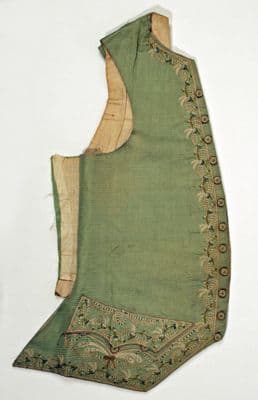
These two pieces reveal how 18th-century European fashion was obsessed with surface decoration as a mark of status, whether through costly silk brocade or painstaking needlework. The French robe's delicate floral sprigs scattered across pale green silk and the bodice fronts' intricate whitework embroidery both transform plain ground fabric into something precious through repetitive, time-intensive ornament.
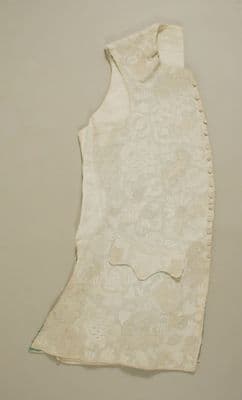
These two pieces reveal how the same delicate sensibility rippled through 18th-century court dress regardless of gender or garment type. The robe's serpentine floral trails and the waistcoat's meandering botanical border both speak the language of Rococo ornament — that obsession with nature tamed into sinuous, decorative lines that never quite repeat.
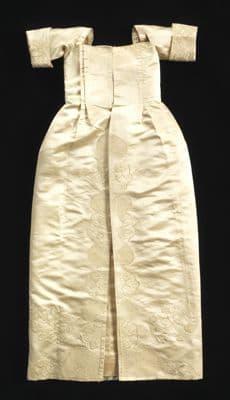
These two dresses speak the same language of constructed femininity across a sixty-year span, both built on the architectural foundation of stays that create their distinctive silhouettes. The earlier cream satin child's dress already shows the Baroque obsession with transforming the body into a geometric ideal—that rigid, conical torso and perfectly smooth front panel that erases any hint of natural form.
These two garments reveal how Rococo's obsession with delicate botanical motifs traveled across the Channel and down the social ladder. The French robe à la française flaunts its silk brocade like aristocratic wallpaper—those tiny sprigs scattered across pale green in perfect, mechanical repetition—while the British waistcoat translates the same floral vocabulary into something more intimate: hand-embroidered silk blooms that follow the garment's curved seams with deliberate irregularity.


These two dresses speak the same language of constructed femininity across a sixty-year span, both built on the architectural foundation of stays that create their distinctive silhouettes. The earlier cream satin child's dress already shows the Baroque obsession with transforming the body into a geometric ideal—that rigid, conical torso and perfectly smooth front panel that erases any hint of natural form.