THE MET
Deep Blue Silk Brocade Russian Sarafan Ensemble
Baroque · 1700s-1800s · Russian
Production
handmade
Material
silk brocade
Culture
Russian
Influences
traditional Russian court dress · Byzantine imperial costume
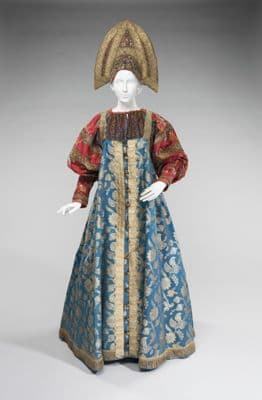
This Russian ensemble features a sarafan - a traditional sleeveless dress with a fitted bodice and full, floor-length skirt in deep blue silk brocade with elaborate gold patterning. The garment opens down the center front with decorative trim. Over this is worn a red silk jacket or soul with fitted sleeves and gold brocade detailing. The ensemble is completed by a tall, arched kokoshnik headdress in matching gold brocade that frames the face in the traditional Russian style. The rich silk fabrics display intricate woven patterns typical of Russian court dress, with the sarafan's construction showing the characteristic high waistline and voluminous skirt that creates an imposing silhouette.
dressa-linesquare necklinefloor length
Connected To
Worn with·chemiseTechnique·brocade-weavingFunction·court-formal
SHARED100 years · cross-culture
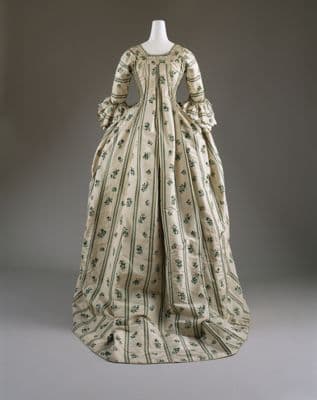
These two gowns reveal how silk brocade became the universal language of 18th-century court power, whether you were navigating Versailles or the Winter Palace. The Russian sarafan's bold blue ground shot with metallic gold threads creates an almost architectural grandeur—notice how the vertical bands of brocade emphasize the dress's columnar silhouette and that towering kokoshnik headdress.
Echoes Across Time
Baroque → Rococo · 100yr56%
SHARED
These two gowns reveal how silk brocade became the universal language of 18th-century court power, whether you were navigating Versailles or the Winter Palace. The Russian sarafan's bold blue ground shot with metallic gold threads creates an almost architectural grandeur—notice how the vertical bands of brocade emphasize the dress's columnar silhouette and that towering kokoshnik headdress.
Worn with·chemiseTechnique·brocade-weavingFunction·court-formal
Pull the Thread→
Follow this garment wherever the graph leads