V&A
Charcoal Gray Brocaded Silk Twill Obi Sash
Baroque · 1700s · Japanese
Production
artisan-craft
Material
brocaded silk twill
Culture
Japanese
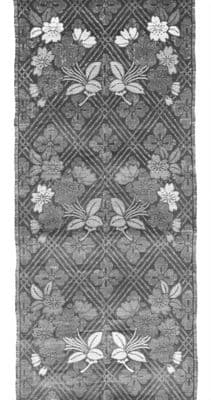
This Japanese obi displays a sophisticated brocaded silk twill construction with a repeating diamond lattice pattern. White and light gray floral motifs, including cherry blossoms and stylized leaves, are woven against a charcoal gray ground. The geometric framework creates regular diamond compartments, each containing carefully balanced botanical elements. The silk shows the characteristic weight and body typical of formal obi textiles, with raised brocaded areas creating subtle surface texture. The pattern repeat demonstrates the mathematical precision of Edo period textile design, where floral naturalism is contained within strict geometric boundaries. This type of obi would have been worn with formal kimono, wrapped multiple times around the waist and tied in elaborate knots at the back.
belt
Connected To
Worn with·kimonoWorn with·undergarmentsTechnique·brocade-weaving
SHARED260 years · cross-category
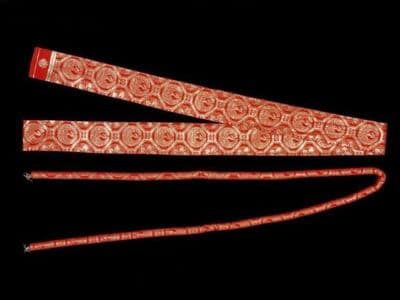
The baroque flourishes of Item A's diamond lattice and European-style florals reveal Japan's 18th-century fascination with Western decorative arts, while Item B's geometric rose medallions represent the more restrained traditional aesthetic that would later reassert itself.
Text88%
Image70%
Entity
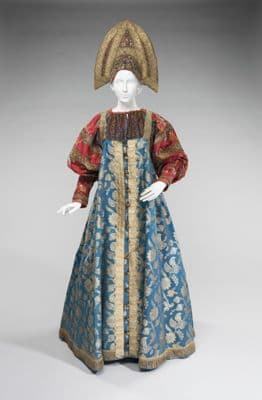
Technique·brocade-weavingTechnique·hand-weavingFunction·court-formal
SHARED40 years · cross-culture · cross-category
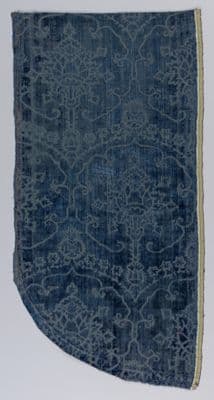
The Russian sarafan's lustrous blue silk brocade and the Japanese obi's intricate woven florals both emerge from the 18th century's global obsession with silk as the ultimate luxury textile—but they reveal how differently East and West approached opulence.
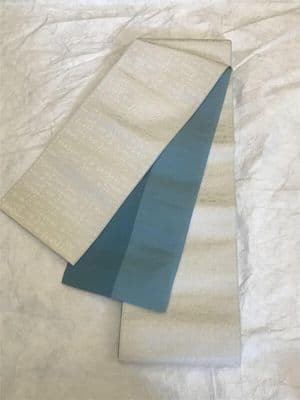
Worn with·kimonoTechnique·hand-weaving
SHARED310 years
Text83%
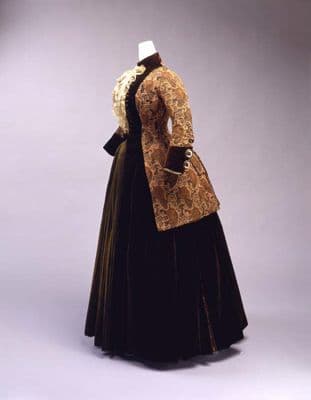
Technique·brocade-weavingFunction·court-formal
SHARED80 years · cross-culture · cross-category
Text67%
Pull the Thread→
Follow this garment wherever the graph leads