SMITHSONIAN
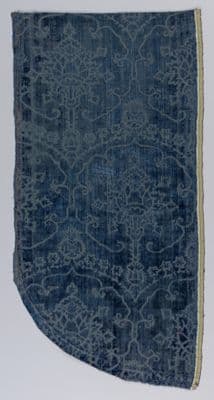
Deep Blue Silk Velvet Fragment with Brocade
Late Medieval · 1400s · Western European
Production
artisan-craft
Material
silk velvet
Culture
Western European
Influences
Islamic textile patterns · Byzantine silk traditions
This textile fragment displays a sophisticated damask or brocade pattern woven into deep blue silk velvet. The design features repeating ogival medallions containing stylized floral motifs, likely pomegranates or artichokes, connected by curvilinear stems and smaller botanical elements. The pattern shows the characteristic luxury textile production of late medieval Europe, with its complex weave structure creating tonal variations within the monochromatic blue palette. The fragment's curved edge suggests it was cut from a larger ceremonial hanging, vestment, or furnishing fabric. The dense pile of the velvet and intricate pattern work demonstrate the high level of silk weaving technology achieved in 15th-century European textile centers.
dress
Connected To
Influences·Byzantine silk traditionsInfluences·Islamic textile patternsTechnique·hand-weaving
SHARED100 years · cross-culture · cross-category
These two velvet fragments reveal how Renaissance luxury textiles evolved from their medieval predecessors while maintaining the same DNA of Byzantine-inspired grandeur. The burgundy Italian piece shows the Renaissance refinement of the pomegranate motif—those bulbous, symmetrical forms that became shorthand for aristocratic taste—while the blue fragment displays the earlier, more geometric interpretation of similar palatial patterns.
Text78%
Image75%
Technique·brocade-weavingTechnique·hand-weaving
SHARED300 years · cross-culture · cross-category
Text65%
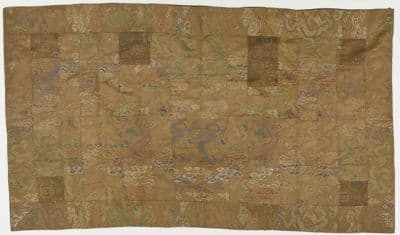
Technique·brocade-weavingFunction·religious-ceremonial
SHARED215 years · cross-culture
Text63%
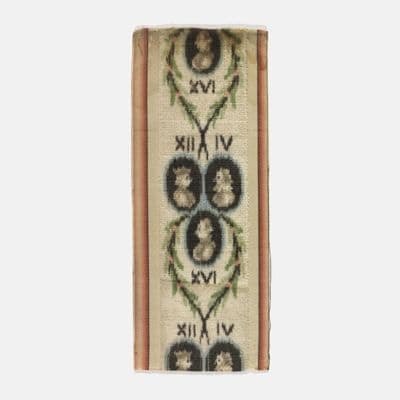
45%
Technique·hand-weavingMotif·medallion
SHARED390 years · cross-culture · cross-category
Text65%
Echoes Across Time
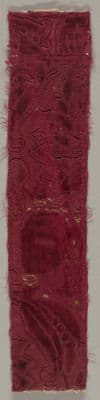
Italian Renaissance → Late Medieval · 100yr80%
SHARED
These two velvet fragments reveal how Renaissance luxury textiles evolved from their medieval predecessors while maintaining the same DNA of Byzantine-inspired grandeur. The burgundy Italian piece shows the Renaissance refinement of the pomegranate motif—those bulbous, symmetrical forms that became shorthand for aristocratic taste—while the blue fragment displays the earlier, more geometric interpretation of similar palatial patterns.
Influences·Byzantine silk traditionsInfluences·Islamic textile patternsTechnique·hand-weaving
Pull the Thread→
Follow this garment wherever the graph leads