2010s · 2010s · Japanese
Designer
Hirocoledge
Production
artisan-craft
Material
figured twill silk
Culture
Japanese
Movement
Dark Academia
Influences
traditional obi construction · contemporary minimalist design
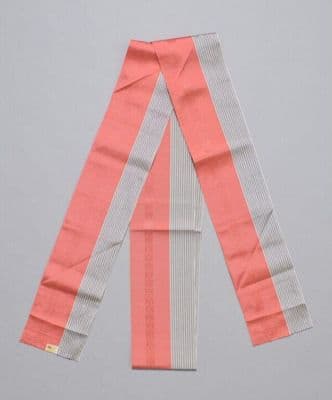
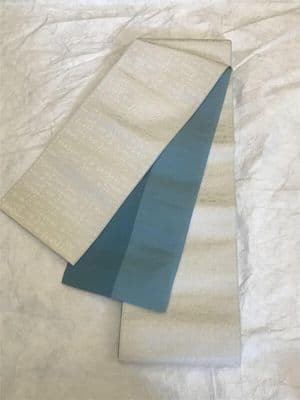
A contemporary Japanese hanahaba obi featuring geometric color-blocking in muted tones. The narrow formal obi displays a sophisticated interplay of sage green and cream panels with subtle figured twill texture creating dimensional surface interest. The construction shows precise angular divisions that create a modern interpretation of traditional obi design. The silk has a refined matte finish typical of high-quality twill weaving. The proportions follow classical hanahaba measurements - narrower than a standard fukuro obi but maintaining the formal structure required for ceremonial kimono wear. The color palette reflects contemporary minimalist aesthetics while honoring traditional Japanese textile craftsmanship.


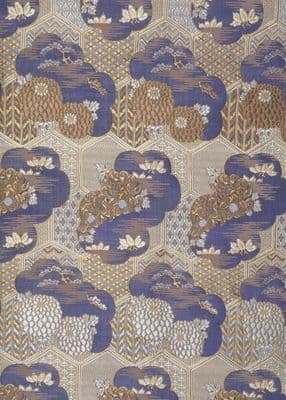
These obi span nearly a century but share the essential Japanese understanding that a sash can carry the visual weight of an entire outfit. The 1920s brocade deploys its purple ground like a stage set for golden dragons and cherry blossoms, weaving narrative into silk with the kind of maximalist confidence that defined the era's luxury textiles.

Follow this garment wherever the graph leads
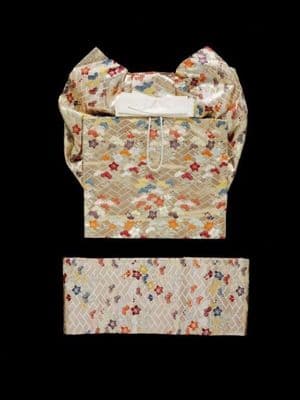
These obi span nearly a century but share the essential Japanese understanding that a sash can carry the visual weight of an entire outfit. The 1920s brocade deploys its purple ground like a stage set for golden dragons and cherry blossoms, weaving narrative into silk with the kind of maximalist confidence that defined the era's luxury textiles.
The sage green obi's stark geometric precision—that clean-edged triangle slicing through neutral silk—feels worlds away from the scattered bellflower confetti dancing across the brocade obi's cream ground, yet both speak the same visual language of calculated restraint.
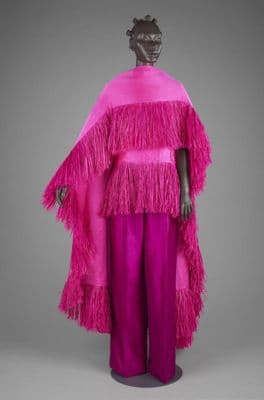
The sage obi's austere geometry and the fuchsia cape's exuberant fringe couldn't look more different, yet both carry the DNA of ceremonial restraint — the Japanese piece through its muted palette and precise pleating, the African garment through its structured silhouette beneath all that kinetic movement.
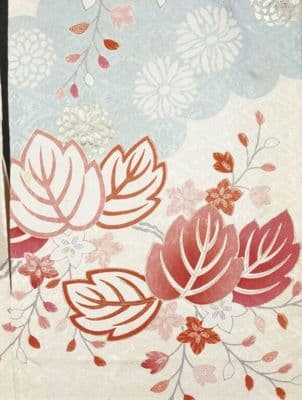
These two pieces reveal how Japanese textile artistry pivots between restraint and abundance while maintaining its essential DNA. The sage obi's severe geometry—those crisp, architectural stripes in muted silk—finds its flamboyant cousin in the kimono's coral blooms that seem to float across the fabric like scattered petals.

The sage green obi's stark geometric precision—that clean-edged triangle slicing through neutral silk—feels worlds away from the scattered bellflower confetti dancing across the brocade obi's cream ground, yet both speak the same visual language of calculated restraint.