V&A
Coral Red Silk Kimono with Floral Embroidery
Great Depression · 1930s · Japanese
Production
artisan-craft
Material
embroidered silk
Culture
Japanese
Influences
traditional Japanese textile design · Meiji period floral aesthetics
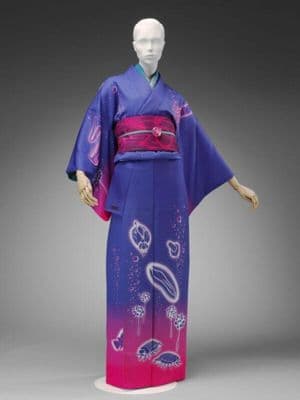
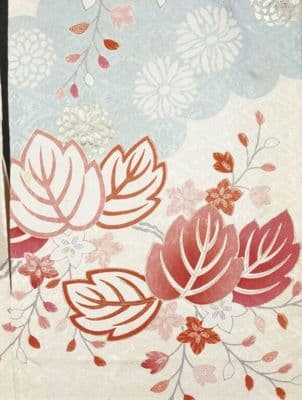
This Japanese textile ensemble displays a sophisticated floral pattern rendered in coral red and white against a pale blue and cream ground. The silk fabric features large stylized lotus or peony blooms with detailed leaf motifs, executed through embroidery or resist-dyeing techniques. Smaller scattered blossoms and delicate branch elements create secondary patterns across the surface. The textile shows the refined aesthetic of 1930s Japanese design, where traditional motifs were adapted with subtle modern sensibilities. The obi-age and koshi-himo accessories would have been essential components for proper kimono wearing, with the synthetic crêpe indicating the period's adoption of new materials alongside traditional silk.
dressloose fitfloor length
Connected To
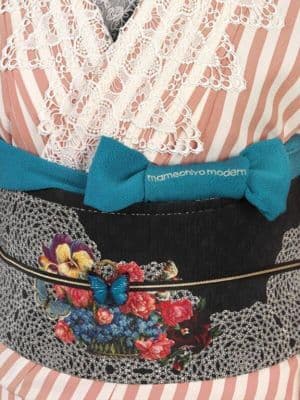
Worn with·kimonoWorn with·obi
SHARED80 years · cross-category
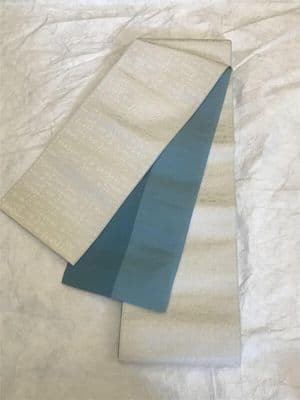
These two pieces reveal how Japanese textile artistry maintained its essential DNA even as it crossed oceans and decades. The obiage's delicate coral florals scattered across silk crêpe echo the same botanical sensibility as the kimono's bold red lotus blooms, but where the traditional sash whispers its pattern in subtle tonal shifts, the Depression-era kimono shouts its flowers in vivid embroidered relief.
Pull the Thread→
Follow this garment wherever the graph leads