V&A
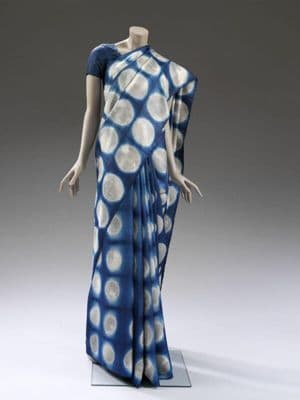
Indigo Blue Tasar Silk Sari with White Circles
Traditional Indian · 2010s · Indian
Production
artisan-craft
Material
tasar silk
Culture
Indian
Influences
traditional bandhani technique · Kutch regional textile traditions
A traditional Indian sari crafted from tasar silk featuring a bold resist-dyed pattern of large white circles against deep indigo blue ground. The fabric displays the characteristic irregular texture of wild silk with subtle sheen. The circular motifs vary in size and are created through tie-dye or bandhani technique, showing the hand-crafted quality typical of Kutch regional textiles. The sari is draped in classical style with pleated front and pallu (end piece) falling over the shoulder. The geometric pattern creates visual rhythm across the six-yard length, while the natural drape of the silk creates soft folds that enhance the circular motifs.
dressdrapedfloor length
Connected To
61%
Worn with·blouseWorn with·petticoatFunction·festival-celebration
SHARED50 years · cross-culture
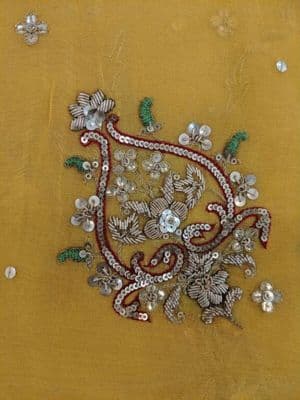
These saris reveal how the same six-yard canvas can carry completely different visual languages while serving identical cultural functions. The indigo piece speaks in bold geometric absolutes—those crisp white circles scattered across deep blue tasar silk like a modernist's dream of traditional resist-dyeing—while the yellow chiffon whispers in the ornate vocabulary of hand-embroidered paisleys, each motif a tiny garden of metallic threads and sequins.
Worn with·blouseWorn with·petticoatTechnique·hand-weaving
SHARED160 years · cross-culture
These saris reveal how the same six-yard formula can carry completely different visual languages across centuries. The indigo piece floats those perfect white circles like moon phases against deep blue—pure geometry that feels almost contemporary in its bold simplicity.
Worn with·blouseWorn with·petticoatTechnique·hand-weaving
SHARED60 years
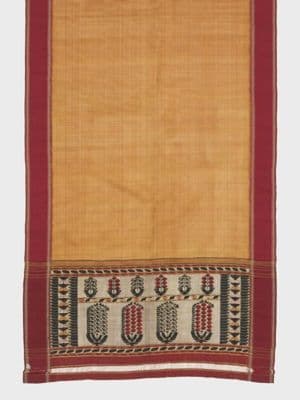
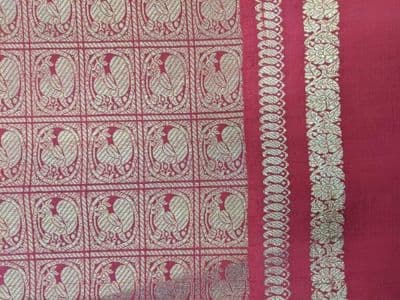
These saris reveal how Indian textile traditions encode meaning through radically different visual languages—the indigo tasar's loose, organic circles floating like scattered moons against deep blue, versus the Kanchipuram's regimented gold brocade grid that locks each motif into geometric precision. The first whispers of village looms and natural dyes, while the second announces temple town grandeur with its metallic threads that catch light like armor.
Worn with·blouseWorn with·petticoat
SHARED50 years · cross-culture · cross-category
Text55%
Echoes Across Time
Traditional Indian → Traditional Indian · 50yr61%
SHARED
These saris reveal how the same six-yard canvas can carry completely different visual languages while serving identical cultural functions. The indigo piece speaks in bold geometric absolutes—those crisp white circles scattered across deep blue tasar silk like a modernist's dream of traditional resist-dyeing—while the yellow chiffon whispers in the ornate vocabulary of hand-embroidered paisleys, each motif a tiny garden of metallic threads and sequins.
Worn with·blouseWorn with·petticoatFunction·festival-celebration
Pull the Thread→
Follow this garment wherever the graph leads