V&A
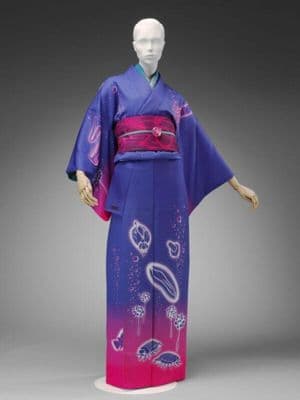
Deep Sea Printed Polyester Contemporary Kimono
2020s · 2010s · Japanese
Designer
Iroca
Production
artisan-craft
Material
digitally printed polyester
Culture
Japanese
Movement
Cottagecore
Influences
traditional kimono construction · contemporary digital textile design
A contemporary kimono featuring traditional straight-line construction with wide rectangular sleeves and floor-length proportions. The garment displays a gradient color transition from deep purple at the shoulders flowing to bright magenta pink at the hem. Digital printing creates scattered circular motifs in white and darker tones across the surface, resembling floating bubbles or sea forms. The obi sash in coordinating magenta secures the garment at the waist in traditional manner. Modern polyester fabric allows for crisp color saturation while maintaining the kimono's characteristic geometric silhouette and overlapping front panels.
dressloose fitfloor length
Connected To
75%
Influences·traditional kimono constructionWorn with·obiWorn with·
Echoes Across Time
2020s → Japanese Traditional · 50yr75%
SHARED
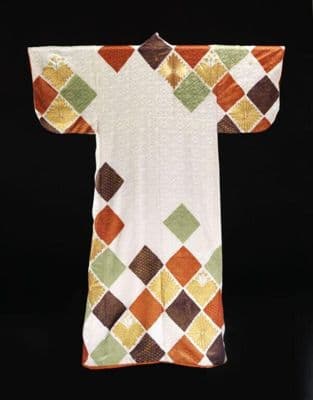
These two kimono reveal how traditional Japanese garment construction can carry radically different visual languages across generations. The contemporary piece transforms the classic T-shaped silhouette into a canvas for bold geometric abstraction—those floating circles and organic shapes scattered across the blue-to-pink gradient feel more like a digital artist's experiment than centuries-old craft.
Influences·traditional kimono constructionWorn with·obiWorn with·undergarments
Pull the Thread→
Follow this garment wherever the graph leads