V&A
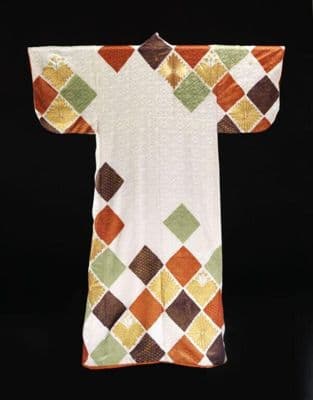
Cream Satin Silk Kimono with Gold Embroidered Chrysanthemums
Japanese Traditional · 1960s · Japanese
Production
artisan-craft
Material
figured satin silk
Culture
Japanese
Influences
traditional kimono construction · mid-century geometric modernism
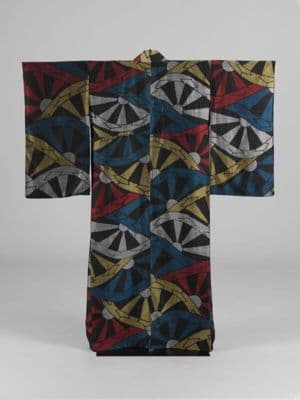
A formal Japanese kimono constructed from figured satin silk with a distinctive diamond-pattern arrangement across the garment. The base fabric is cream-colored, overlaid with a geometric grid of colored diamond shapes in orange, green, brown, and gold tones. Each diamond appears to contain embroidered chrysanthemum and paulownia motifs worked in gold thread. The kimono follows traditional T-shaped construction with wide, straight sleeves and a body that falls in clean vertical lines. The surface treatment combines resist-dyeing techniques for the colored squares with detailed hand-embroidery of the floral elements. The geometric modernist approach to the traditional floral motifs reflects mid-20th century Japanese design sensibilities, balancing contemporary aesthetic preferences with classical kimono construction and symbolic imagery.
dressstraightfloor length
Connected To
75%
Influences·traditional kimono constructionWorn with·obiWorn with·undergarmentsFunction
Echoes Across Time
2020s → Japanese Traditional · 50yr75%
SHARED
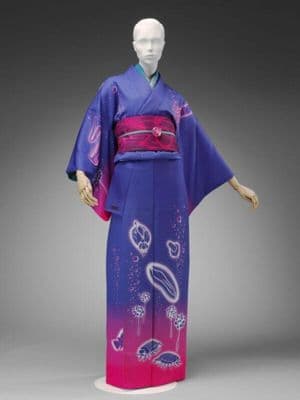
These two kimono reveal how traditional Japanese garment construction can carry radically different visual languages across generations. The contemporary piece transforms the classic T-shaped silhouette into a canvas for bold geometric abstraction—those floating circles and organic shapes scattered across the blue-to-pink gradient feel more like a digital artist's experiment than centuries-old craft.
Influences·traditional kimono constructionWorn with·obiWorn with·undergarments
Pull the Thread→
Follow this garment wherever the graph leads