V&A
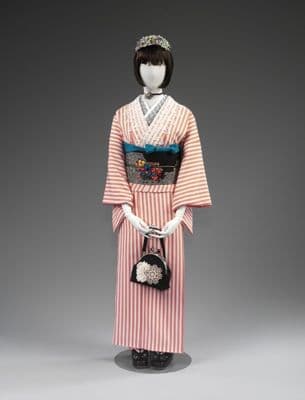
Pink White Striped Cotton Kimono with Obi
Japanese Traditional · 2010s · Japanese
Designer
Natsuko
Production
artisan-craft
Material
cotton
Culture
Japanese
Influences
traditional Japanese kimono construction
A traditional Japanese kimono displayed on a mannequin, featuring pink and white vertical stripes throughout the main body. The garment is secured with a dark blue obi sash decorated with floral motifs, tied in the traditional manner at the back. The kimono exhibits the classic T-shaped silhouette with wide, flowing sleeves and floor-length hem. A small black handbag with decorative elements is positioned at the waist area. The ensemble includes traditional hair ornaments on the mannequin's head. The construction follows centuries-old Japanese textile traditions with precise geometric striping and careful attention to proportion and drape.
dressstraightv-neckfloor length
Connected To
Influences·traditional Japanese kimono constructionWorn with·obiTechnique·resist-dyeing
Echoes Across Time
Japanese Traditional → Japanese Traditional · 60yr75%
SHARED
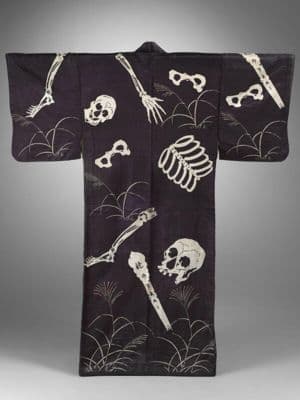
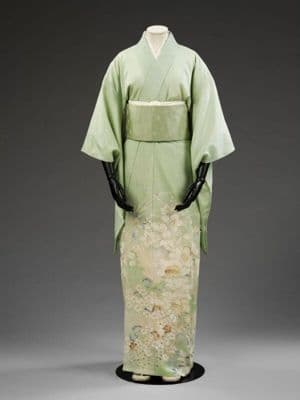
These two kimono reveal how Japanese dress navigates the tension between tradition and personal expression across generations. The pink striped cotton version breaks convention with its bold geometric pattern and bright obi clash—a deliberate departure from classical restraint that speaks to modern individualism within traditional form.
Influences·traditional Japanese kimono constructionWorn with·obiTechnique·resist-dyeing
Pull the Thread→
Follow this garment wherever the graph leads