V&A
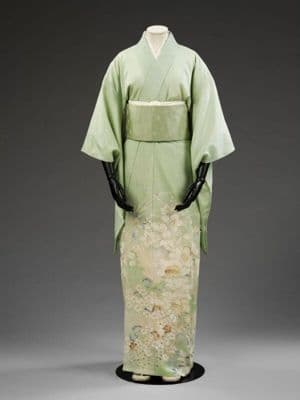
Pale Green Silk Gauze Summer Kimono
Japanese Traditional · 1950s · Japanese
Production
handmade
Material
silk gauze
Culture
Japanese
Influences
traditional Japanese kimono construction · Edo period floral motifs
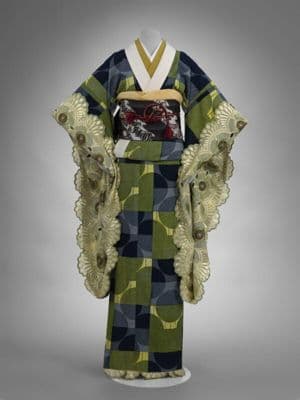
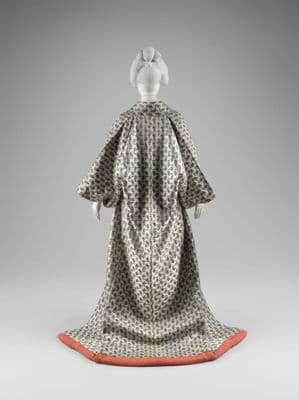
A formal summer kimono constructed from lightweight silk gauze in pale green. The garment features the traditional T-shaped silhouette with wide, flowing sleeves and a straight-line body that falls to ankle length. The lower portion displays delicate resist-dyed motifs of fuyō (hibiscus) and nadeshiko (carnation) flowers in soft pink and white tones against the green ground. The resist-dyeing technique creates subtle, organic patterns with characteristic soft edges. A darker green obi sash wraps around the waist, secured with traditional tying methods. The lightweight gauze construction provides breathability appropriate for summer wear while maintaining the formal structure required for ceremonial occasions during Japan's post-war reconstruction period.
dressstraightfloor length
Connected To
Influences·traditional Japanese kimono constructionWorn with·obiTechnique·resist-dyeingFunction
Echoes Across Time
Japanese Traditional → Japanese Traditional · 60yr75%
SHARED
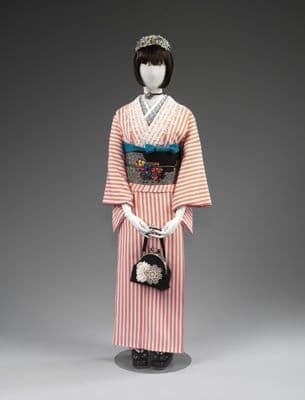
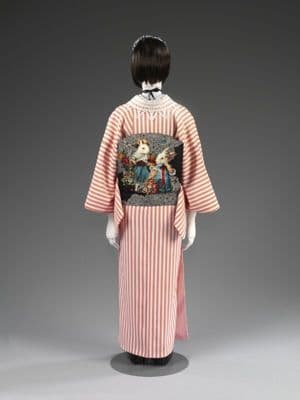
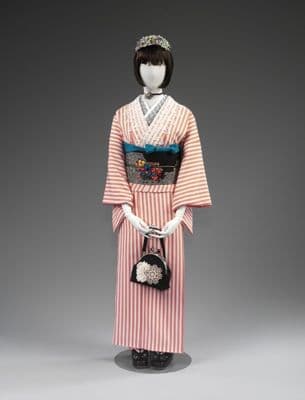
These two kimono reveal how Japanese dress navigates the tension between tradition and personal expression across generations. The pink striped cotton version breaks convention with its bold geometric pattern and bright obi clash—a deliberate departure from classical restraint that speaks to modern individualism within traditional form.
Influences·traditional Japanese kimono constructionWorn with·obiTechnique·resist-dyeing
Pull the Thread→
Follow this garment wherever the graph leads