V&A
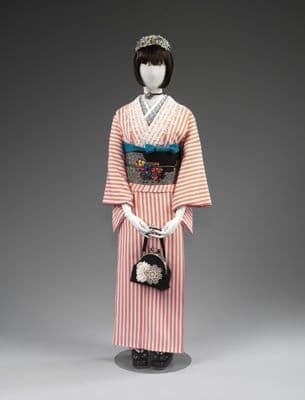
Pink White Striped Silk Kimono with Obi
Japanese Traditional · 2010s · Japanese
Designer
Keiko Igata
Production
artisan-craft
Material
silk
Culture
Japanese
Influences
traditional Japanese kimono construction
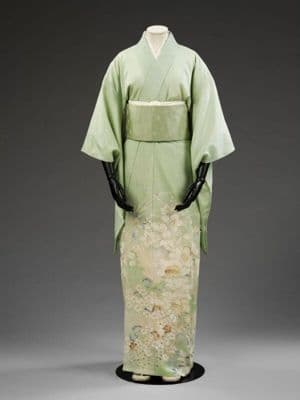
A traditional Japanese kimono displayed on a mannequin, featuring a pink and white striped pattern throughout the main body. The garment has wide, flowing sleeves characteristic of kimono construction and is secured with a dark navy blue obi sash wrapped around the waist. The kimono appears to be made of silk with precise geometric striping. A small decorative element, possibly a traditional accessory or ornament, hangs from the obi. The garment demonstrates classic Japanese tailoring techniques with straight-line construction and minimal shaping, relying on the obi for waist definition. The striped pattern creates visual rhythm across the fabric surface.
dressstraightv-neckfloor length
Connected To
Influences·traditional Japanese kimono constructionWorn with·obiWorn with·
Echoes Across Time
Japanese Traditional → Japanese Traditional · 50yr76%
SHARED
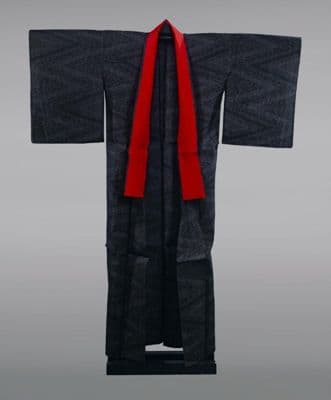
These two kimono reveal the exquisite range within traditional Japanese formal dress—the first, with its candy-stripe pink and white silk and ornate floral obi, speaks to celebratory occasions where color announces joy, while the second's midnight navy silk with that dramatic scarlet lining whispers of somber ceremony or high formality.
Influences·traditional Japanese kimono constructionWorn with·obiWorn with·undergarments
Pull the Thread→
Follow this garment wherever the graph leads