V&A
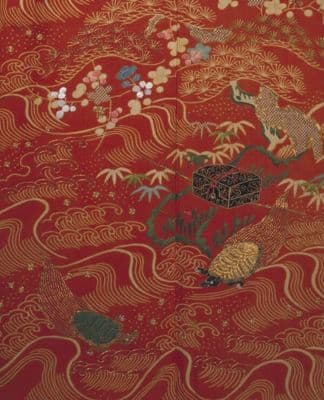
Deep Red Silk Crêpe Kimono with Embroidered Design
Victorian Late / Bustle · 1870s · Japanese
Production
artisan-craft
Material
silk crêpe
Culture
Japanese
Influences
traditional Japanese textile design · cherry blossom seasonal motifs
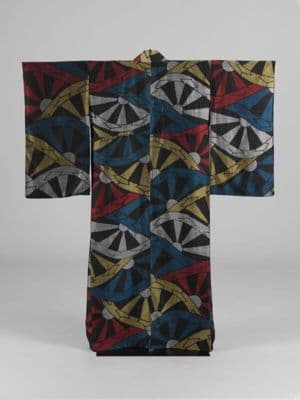
This silk crêpe kimono displays an elaborate surface design combining resist-dyeing and embroidery techniques on a deep red ground. The textile features flowing water motifs rendered in gold metallic threads that create undulating wave patterns across the fabric. Cherry blossoms in white and pink are scattered throughout, along with geometric medallions and stylized floral elements in blue and gold. The crêpe fabric has a characteristic textured surface that adds depth to the design. The construction follows traditional Japanese kimono geometry with straight-cut panels and wide sleeves. The sophisticated color palette and dense decorative program indicate this was likely a formal garment for special occasions, demonstrating the high level of textile artistry achieved during Japan's late Edo to early Meiji period.
dressloose fitfloor length
Connected To
Worn with·obiWorn with·undergarmentsTechnique·hand-embroideryTechnique·
Echoes Across Time
2000s → Victorian Late / Bustle · 130yr66%
SHARED
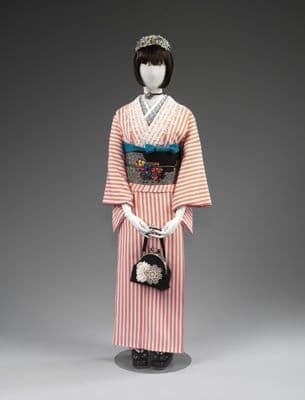
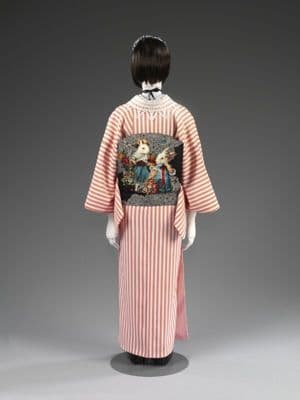
The Victorian kimono's dense embroidered landscape of flowing water, cherry blossoms, and geometric motifs reveals how Japanese export textiles catered to Western fantasies of the exotic, layering every inch with ornamental drama. The contemporary striped kimono pulls back to essential geometry—clean coral and white lines that let the obi's narrative embroidery breathe as the singular focal point.
Worn with·obiWorn with·undergarmentsTechnique·hand-embroidery
Pull the Thread→
Follow this garment wherever the graph leads