V&A
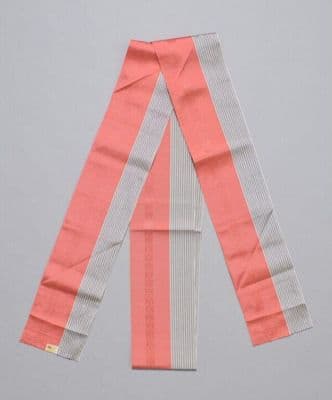
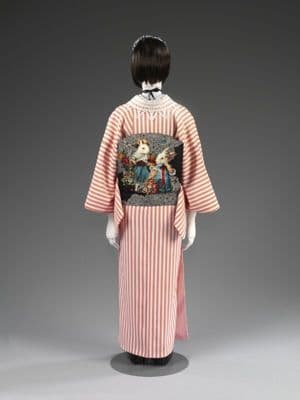
Coral Pink Striped Silk Kimono with Obi
2000s · 2000s · Japanese
Production
artisan-craft
Material
silk
Culture
Japanese
Movement
Indie Sleaze
Influences
Edo period kimono construction · traditional obi decoration
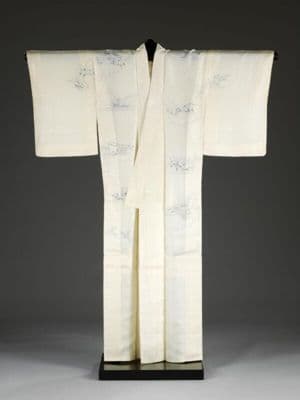
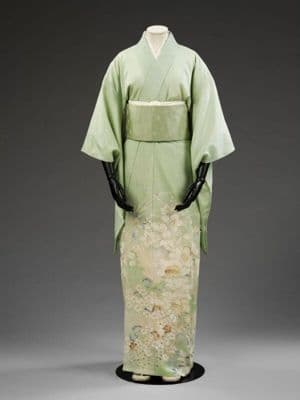
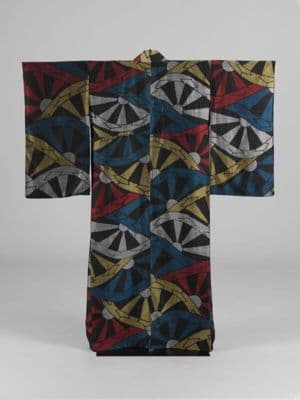
A traditional Japanese kimono displayed from the back, featuring coral pink and white vertical stripes. The garment follows classic kimono construction with wide sleeves and a straight-line silhouette that falls to ankle length. The focal point is an elaborate obi (wide sash) wrapped around the waist, decorated with a complex pictorial design featuring multiple figures in traditional dress against a dark background. The obi appears to depict a narrative scene with warriors or courtly figures. The kimono's striped pattern creates vertical lines that emphasize the garment's formal, structured appearance. The silk fabric has a crisp finish typical of formal kimono textiles.
dressstraightfloor length
Connected To
Worn with·obiWorn with·undergarmentsTechnique·hand-embroideryTechnique·
Echoes Across Time
2000s → Victorian Late / Bustle · 130yr66%
SHARED
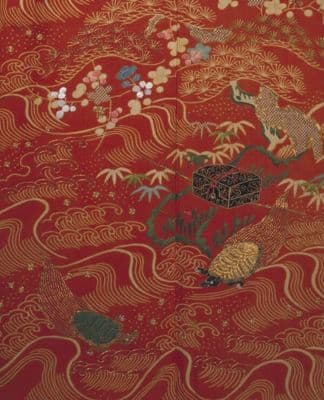
The Victorian kimono's dense embroidered landscape of flowing water, cherry blossoms, and geometric motifs reveals how Japanese export textiles catered to Western fantasies of the exotic, layering every inch with ornamental drama. The contemporary striped kimono pulls back to essential geometry—clean coral and white lines that let the obi's narrative embroidery breathe as the singular focal point.
Worn with·obiWorn with·undergarmentsTechnique·hand-embroidery
Pull the Thread→
Follow this garment wherever the graph leads