V&A
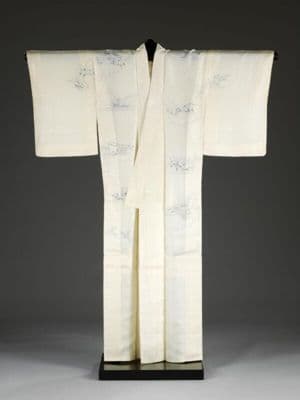
Hand-Painted Silk Kimono with Floral Building Motifs
Wartime / Utility Fashion · 1940s · Japanese
Production
handmade
Material
plain-weave silk
Culture
Japanese
A formal Japanese kimono constructed from cream-colored plain-weave silk with hand-painted decorative motifs scattered across the surface. The garment displays the traditional T-shaped silhouette with wide, rectangular sleeves extending horizontally from the body. Delicate blue and gray painted vignettes depict stylized flowers and traditional thatched-roof buildings in a sparse, asymmetrical arrangement typical of Japanese aesthetic principles. The kimono features the characteristic straight-line construction with no fitted seaming, designed to wrap around the body and be secured with an obi sash. The painting technique appears refined, suggesting this was a high-quality formal garment for special occasions during the Shōwa period.
dressstraightfloor length
Connected To
Worn with·obiWorn with·undergarmentsFunction·religious-ceremonial
SHARED70 years
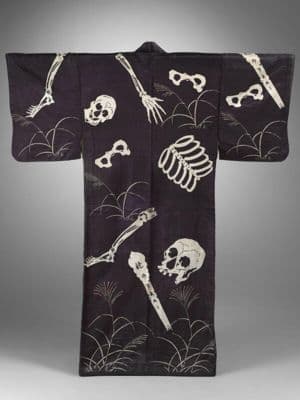
These two kimonos reveal how Japanese textile artists have always found ways to embed meaning into seemingly simple garments, even when working under vastly different constraints. The wartime silk piece, with its scattered architectural motifs on cream ground, speaks to a moment when luxury materials were scarce but cultural expression persisted through subtle, almost coded imagery—those delicate building forms floating across the fabric like memories of a more prosperous time.
Text77%
Image83%
Worn with·obiWorn with·undergarmentsFunction·religious-ceremonial
SHARED60 years
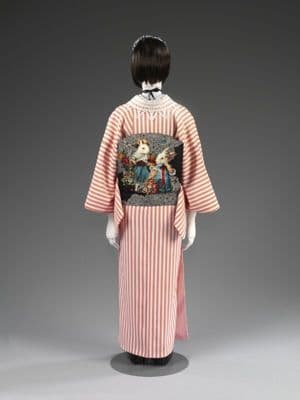
The coral-striped kimono's theatrical obi, painted with what appears to be a dramatic historical scene, speaks the same visual language as the wartime kimono's scattered architectural motifs—both transform the back panel into a canvas for storytelling. Sixty years separate these garments, but they share Japan's tradition of using the obi and kimono body as sites for narrative art, whether depicting epic tales or subtle symbols of rebuilding.
55%
Worn with·obiWorn with·undergarments
SHARED40 years
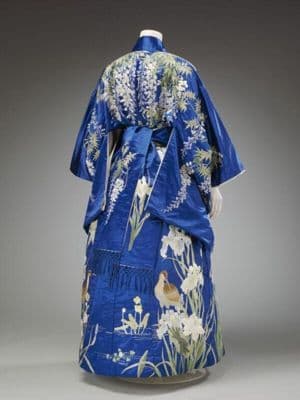
These two kimono reveal how Japan's textile traditions bent but never broke under Western influence and wartime austerity. The earlier blue silk blazes with cascading wisteria embroidered in metallic threads—pure Meiji-era opulence when Japan was showing off its craft mastery to the world.
53%
Worn with·obiWorn with·undergarments
SHARED100 years
Text71%
Echoes Across Time
Wartime / Utility Fashion → 2010s · 70yr59%
SHARED
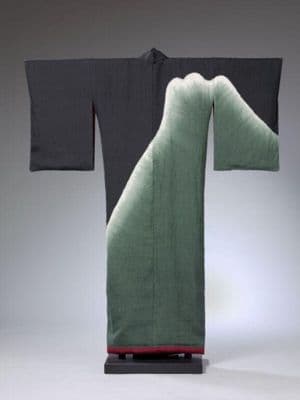
These two kimonos reveal how Japanese textile artists have always found ways to embed meaning into seemingly simple garments, even when working under vastly different constraints. The wartime silk piece, with its scattered architectural motifs on cream ground, speaks to a moment when luxury materials were scarce but cultural expression persisted through subtle, almost coded imagery—those delicate building forms floating across the fabric like memories of a more prosperous time.
Worn with·obiWorn with·undergarmentsFunction·religious-ceremonial
Pull the Thread→
Follow this garment wherever the graph leads