Edwardian · 1900s · Japanese
Production
artisan-craft
Material
silk satin
Culture
Japanese
Movement
Japonisme
Influences
traditional Japanese kimono construction · Western tea gown styling
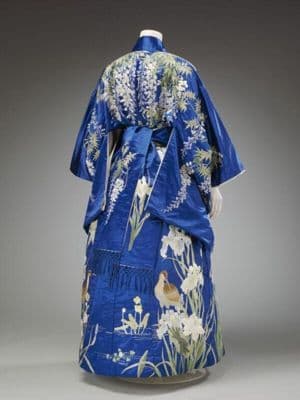
A vibrant royal blue silk satin kimono featuring elaborate embroidered decoration of wisteria cascades, iris blooms, lotus flowers, and two graceful herons in white and gold threads. The wide sleeves extend in traditional T-shape silhouette, while the flowing body reaches ankle length. The matching wide obi sash displays complementary floral motifs. This export-quality piece demonstrates the fusion of traditional Japanese textile artistry with Western market preferences during the early 20th century Japonisme movement. The lustrous satin ground provides rich contrast to the naturalistic embroidery, creating dimensional surface texture through varied thread weights and metallic accents.
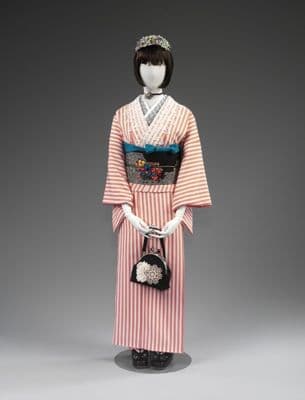
The pink striped cotton kimono's crisp geometry and that broad floral obi speak to everyday Japanese dress, while the royal blue silk's cascading embroidered irises and cranes mark it as a luxury piece from the Edwardian era's Japan obsession.
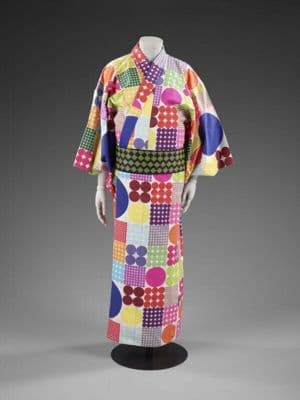

The pink striped cotton kimono's crisp geometry and that broad floral obi speak to everyday Japanese dress, while the royal blue silk's cascading embroidered irises and cranes mark it as a luxury piece from the Edwardian era's Japan obsession.


Follow this garment wherever the graph leads
The century between these two kimonos tells the story of Japan's relationship with its own traditions—one reverent, one rebellious. The Edwardian piece speaks in silk's formal language, its cobalt ground dense with embroidered cranes and water plants that cascade down the back like a painted scroll, every motif positioned with classical precision.
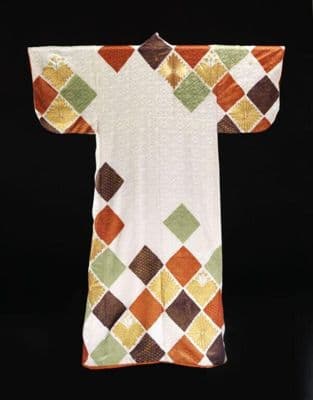
The cobalt kimono with its cascade of embroidered wisteria and the geometric diamond-patterned kosode reveal how Japanese textile artistry adapted to different aesthetic languages across centuries.
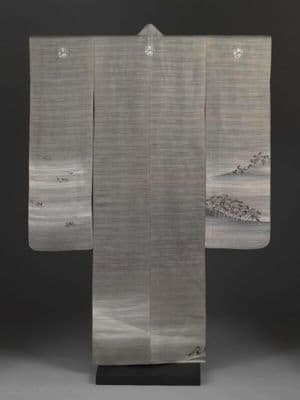
These two kimono reveal how Japanese textile artists mastered the art of seasonal storytelling through radically different approaches to the same canvas. The earlier grey gauze kimono whispers its landscape across sheer silk in subtle ink-wash tones—mountains and water rendered so lightly they seem to breathe with the wearer's movement—while the later blue satin version shouts its botanical drama in thick, raised embroidery that catches light like jewelry.
The century between these two kimonos tells the story of Japan's relationship with its own traditions—one reverent, one rebellious. The Edwardian piece speaks in silk's formal language, its cobalt ground dense with embroidered cranes and water plants that cascade down the back like a painted scroll, every motif positioned with classical precision.