V&A
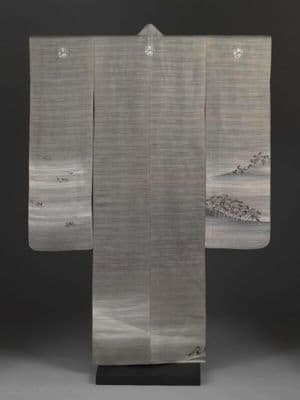
Grey Silk Gauze Summer Kimono with Landscape Design
Victorian Early / Crinoline · 1850s · Japanese
Production
handmade
Material
silk gauze (ro)
Culture
Japanese
A formal summer kimono constructed from ro, a lightweight silk gauze with an open weave creating horizontal striped transparency. The garment displays the classic T-shaped kimono silhouette with wide rectangular sleeves and straight-cut body panels. The pale grey ground features subtle resist-dyed landscape motifs concentrated at the hem, depicting stylized mountains, water, and possibly pine trees in darker grey tones. The ro weave creates distinctive horizontal bands of varying opacity throughout the fabric. White family crests (mon) are positioned at the shoulders and back, indicating formal status. The construction follows traditional Japanese tailoring methods with minimal shaping and precise geometric proportions.
dressstraightfloor length
Connected To
68%
Worn with·obiWorn with·undergarmentsTechnique·hand-weavingTechnique·resist-dyeingMotif·abstract-organic
SHARED160 years
The gossamer landscape kimono whispers where the meisen silk shouts—both garments reveal how Japanese textile artisans have always understood that a kimono's surface is pure canvas, whether for misty mountain scenes dissolved in silk gauze or bold geometric chevrons that dance across the body like jazz-age confetti.
Text75%
Worn with·obiWorn with·undergarmentsTechnique·resist-dyeingMotif·abstract-organic
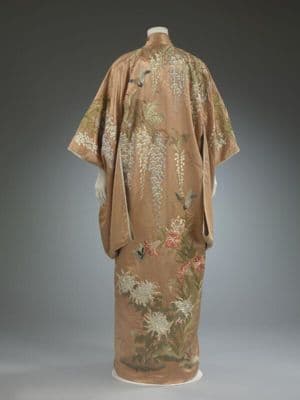
Worn with·obiWorn with·undergarmentsFunction·court-formal
SHARED50 years
These two kimono reveal how Japanese artisans navigated the collision between tradition and Western taste during the Meiji era's cultural upheaval. The earlier grey gauze piece maintains classical restraint—its misty landscape rendered in subtle washes that barely disturb the silk's gossamer surface, embodying the old aesthetic of ma (negative space) and understatement.
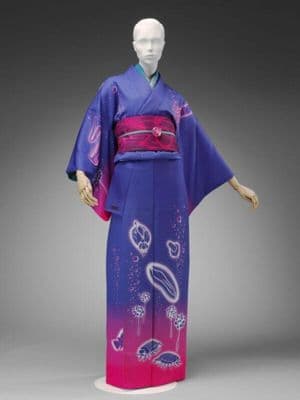
59%
Worn with·obiWorn with·undergarmentsMotif·abstract-organic
SHARED160 years
The vibrant polyester kimono and the whisper-thin silk gauze piece reveal how Japanese textile artists have always understood that the kimono's vast canvas demands either bold graphic punch or exquisite restraint. The contemporary piece uses digital printing to scatter jellyfish and sea creatures across an electric blue-to-magenta gradient, while the Victorian-era summer ro deploys subtle landscape motifs that seem to float on its gossamer weave like mirages.
Echoes Across Time
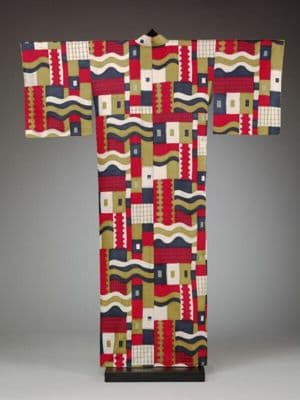
Victorian Early / Crinoline → Japanese Traditional · 160yr68%
SHARED
The gossamer landscape kimono whispers where the meisen silk shouts—both garments reveal how Japanese textile artisans have always understood that a kimono's surface is pure canvas, whether for misty mountain scenes dissolved in silk gauze or bold geometric chevrons that dance across the body like jazz-age confetti.
Worn with·obiWorn with·undergarmentsTechnique·hand-weaving
Pull the Thread→
Follow this garment wherever the graph leads