V&A
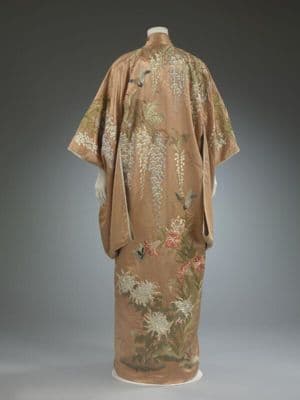
Embroidered Silk Kimono in Dusty Rose
Fin de Siecle / Gibson Girl · 1900s · Japanese
Production
artisan-craft
Material
embroidered silk
Culture
Japanese
Movement
Japonisme
Influences
Meiji period export aesthetic · Western market adaptation
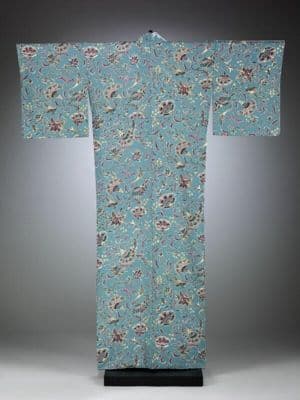
This formal kimono displays the characteristic T-shaped silhouette with wide, flowing sleeves and a straight-cut body that drapes loosely from the shoulders. The dusty rose silk ground is densely embroidered with naturalistic chrysanthemums, wisteria cascades, and other seasonal flowers in cream, sage green, and golden yellow threads. The embroidery work shows sophisticated shading and dimensional techniques typical of Meiji period export textiles. The kimono features wide contrasting borders at the hem and sleeve edges with complementary floral motifs. The construction follows traditional Japanese methods with hand-sewn seams and careful pattern placement that would align when worn with an obi sash.
dressloose fitfloor length
Connected To
Worn with·obiWorn with·undergarmentsFunction·court-formal
SHARED50 years
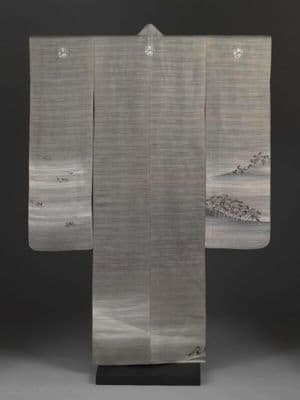
These two kimono reveal how Japanese artisans navigated the collision between tradition and Western taste during the Meiji era's cultural upheaval. The earlier grey gauze piece maintains classical restraint—its misty landscape rendered in subtle washes that barely disturb the silk's gossamer surface, embodying the old aesthetic of ma (negative space) and understatement.
Echoes Across Time
Victorian Early / Crinoline → Fin de Siecle / Gibson Girl · 50yr59%
SHARED
These two kimono reveal how Japanese artisans navigated the collision between tradition and Western taste during the Meiji era's cultural upheaval. The earlier grey gauze piece maintains classical restraint—its misty landscape rendered in subtle washes that barely disturb the silk's gossamer surface, embodying the old aesthetic of ma (negative space) and understatement.
Worn with·obiWorn with·undergarmentsFunction·court-formal
Pull the Thread→
Follow this garment wherever the graph leads