Great Depression · 1930s · Japanese
Designer
Liberty & Co. Ltd
Production
artisan-craft
Material
block printed silk
Culture
Japanese
Movement
Japonisme
Influences
Japanese textile design · Liberty print aesthetic
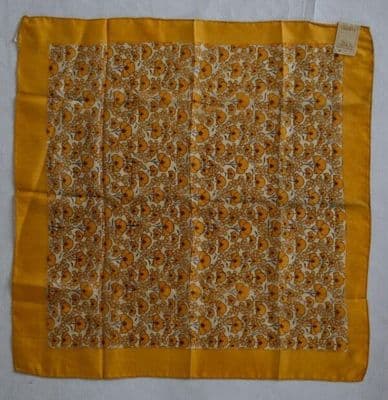
A square silk handkerchief featuring an intricate all-over floral pattern in warm tones of orange and brown on a cream ground, bordered by a solid golden yellow silk frame. The central field displays densely packed small-scale blossoms and foliage in a traditional Japanese aesthetic, executed through block printing technique that creates subtle variations in color saturation. The yellow border is constructed from plain weave silk and appears to be machine-stitched to the printed center panel. The handkerchief demonstrates the Western fascination with Japanese design during the interwar period, particularly through Liberty & Co.'s importation and retail of authentic Japanese textiles for the British market.
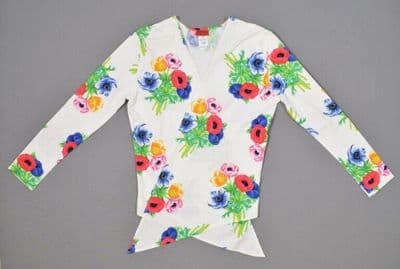
That golden silk square carries the delicate, all-over florals of Japanese textile tradition—tiny blooms scattered like confetti across honey-colored silk with the precision of woodblock printing. Five decades later, the white jersey top borrows that same Japanese sensibility but pumps up the volume: those jewel-bright anemones burst across the fabric with painterly abandon, turning what was once whisper-quiet into something boldly graphic.


That golden silk square carries the delicate, all-over florals of Japanese textile tradition—tiny blooms scattered like confetti across honey-colored silk with the precision of woodblock printing. Five decades later, the white jersey top borrows that same Japanese sensibility but pumps up the volume: those jewel-bright anemones burst across the fabric with painterly abandon, turning what was once whisper-quiet into something boldly graphic.

Follow this garment wherever the graph leads
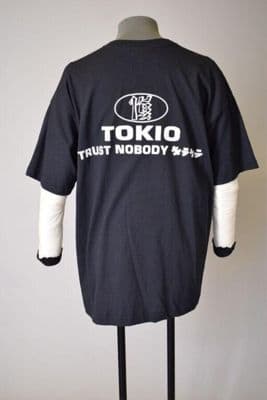
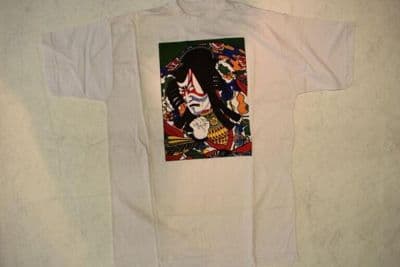
This golden silk handkerchief with its delicate paisley-like florals and the stark black tee proclaiming "TOKYO TRUST NOBODY" represent two wildly different moments when Japanese aesthetics infiltrated Western dress. The handkerchief's ornate botanical motifs echo the Japonisme craze that swept through luxury goods during the Depression, when exotic Eastern patterns offered escapist glamour to those who could afford silk squares.
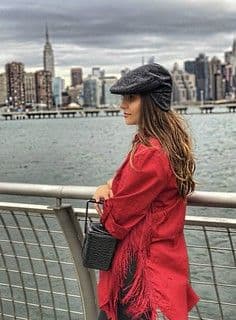
The red kimono coat's dramatic wide sleeves and wrap silhouette echo the same Japanese aesthetic DNA that made Western collectors covet delicate silk squares like this golden handkerchief during the Depression era. Both pieces translate Japanese design principles—the coat through its architectural drape and the handkerchief through its intricate floral motifs—but where the vintage square whispers with miniaturist precision, today's kimono shouts with oversized confidence.
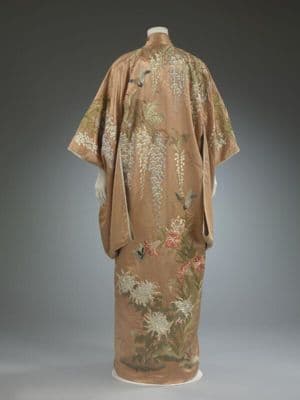
Both pieces reveal how Japan's forced opening to the West in the 1850s created a two-way current of influence that lasted decades. The handkerchief's dense chrysanthemum pattern, block-printed in that particular burnt orange palette, carries the same aesthetic DNA as the kimono's cascading wisteria embroidery—both deploy nature motifs with that distinctly Japanese sense of asymmetrical rhythm and seasonal specificity.

This golden silk handkerchief with its delicate paisley-like florals and the stark black tee proclaiming "TOKYO TRUST NOBODY" represent two wildly different moments when Japanese aesthetics infiltrated Western dress. The handkerchief's ornate botanical motifs echo the Japonisme craze that swept through luxury goods during the Depression, when exotic Eastern patterns offered escapist glamour to those who could afford silk squares.