V&A
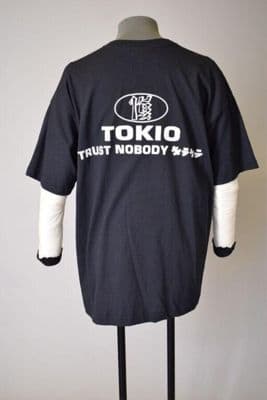
Black Cotton Graphic T-Shirt with White Print
1990s · 1990s · British
Production
mass-produced
Material
cotton
Culture
British
Movement
Japonisme · Grunge
Influences
Japanese street fashion · 1990s graphic tee culture
A black cotton t-shirt featuring white printed text and logo on the back. The garment displays 'TOKIO' in large letters with 'TRUST NOBODY' below it, accompanied by Japanese characters. The shirt has a standard crew neckline and short sleeves with a boxy, oversized silhouette typical of 1990s streetwear. The cotton appears to be a medium-weight jersey knit with a smooth surface treatment. The graphic design reflects the era's fascination with Japanese culture and streetwear aesthetics, combining English and Japanese text in a bold, statement-making layout that exemplifies early 1990s graphic tee design.
top/t-shirt/sweatshirtoversizedcrew neckhip length
Connected To
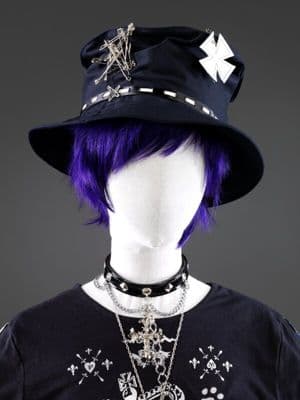
Influences·Japanese street fashionFunction·protest-subculture
SHARED10 years · cross-culture · cross-category
The black tee's stark "TRUST NOBODY" declaration and the purple wig's deliberately artificial sheen both weaponize artifice as rebellion — one through cynical text, the other through aggressively fake hair that refuses to apologize for its synthetic origins. What bridges the decade between them is how Japanese street culture taught global fashion that authenticity could be performed through obvious inauthenticity, turning the fake into a form of honesty.
Echoes Across Time
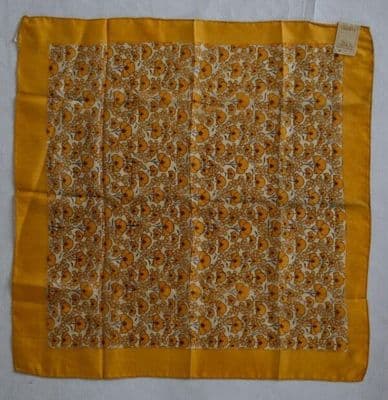
Great Depression → 1990s · 60yr57%
SHARED
This golden silk handkerchief with its delicate paisley-like florals and the stark black tee proclaiming "TOKYO TRUST NOBODY" represent two wildly different moments when Japanese aesthetics infiltrated Western dress. The handkerchief's ornate botanical motifs echo the Japonisme craze that swept through luxury goods during the Depression, when exotic Eastern patterns offered escapist glamour to those who could afford silk squares.
Movement·Japonisme
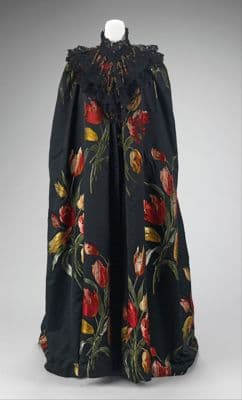
Victorian Late / Bustle → 1990s
Pull the Thread→
Follow this garment wherever the graph leads