V&A
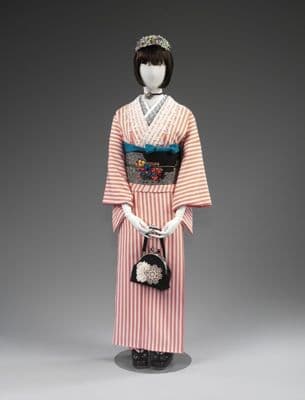
Pink White Striped Polyester Crepe Kimono
Japanese Traditional · 2010s · Japanese
Designer
Mamechiyo Modern
Production
ready-to-wear
Material
polyester crepe
Culture
Japanese
Movement
Japanese Contemporary Fashion
Influences
traditional Japanese kimono construction · Western striped textile patterns
A contemporary reinterpretation of traditional Japanese kimono featuring vertical pink and white stripes throughout the body. The garment maintains classic kimono proportions with wide, straight sleeves and ankle-length hem. A contrasting teal obi sash with floral motifs cinches the waist, creating the traditional silhouette. The synthetic polyester crepe fabric offers a modern alternative to traditional silk, allowing for easier care while preserving the kimono's characteristic drape. The striped pattern represents a fusion of Western textile design with Japanese garment construction, typical of contemporary Japanese fashion that bridges traditional and modern aesthetics.
dressstraightfloor length
Connected To
Worn with·obiWorn with·undergarmentsTechnique·machine-weaving
Echoes Across Time
Japanese Traditional → Great Depression · 75yr58%
SHARED
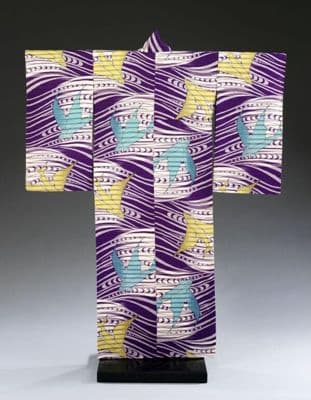
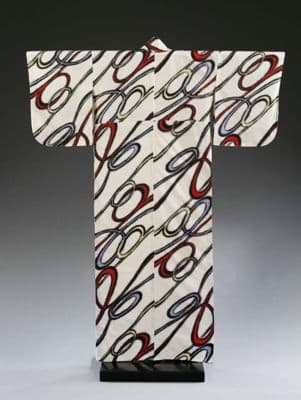
The pink striped kimono's crisp polyester geometry and the meisen silk's swooping abstract pattern represent two moments when Japanese textile makers embraced industrial innovation—the first responding to postwar synthetic materials, the second to Depression-era cost-cutting that made meisen weaving accessible to the emerging middle class.
Worn with·obiWorn with·undergarmentsTechnique·machine-weaving
Pull the Thread→
Follow this garment wherever the graph leads