V&A
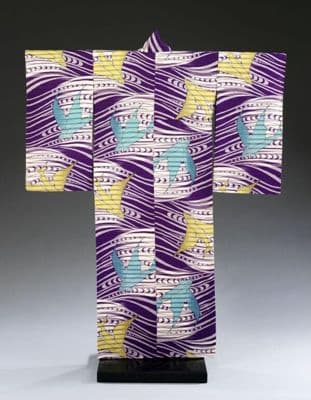
Deep Purple Cotton Summer Kimono Flying Fish
Great Depression · 1920s-1930s · Japanese
Production
handmade
Material
plain weave cotton
Culture
Japanese
Influences
traditional Japanese yukata styling
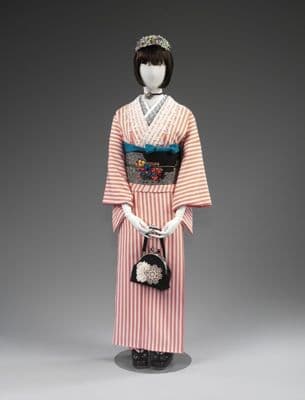
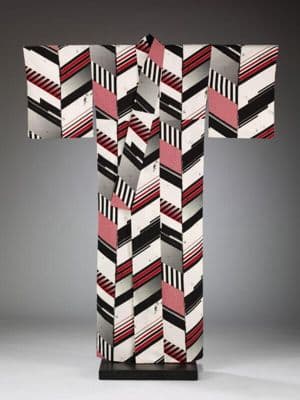
A traditional Japanese summer kimono constructed from plain weave cotton with resist-dyed patterning. The garment displays the classic T-shaped kimono silhouette with wide, straight sleeves and a rectangular body panel. The surface features an all-over design of stylized flying fish rendered in deep purple, light blue, yellow, and white through resist-dyeing technique. The fish motifs are arranged in flowing diagonal bands across the fabric, creating dynamic movement. The cotton construction indicates this was designed for warm weather wear, as cotton kimono were typically reserved for summer months. The geometric arrangement of the fish pattern shows influence of both traditional Japanese textile design and the modernizing aesthetic trends of the Taishō-Shōwa transition period.
dressloose fitfloor length
Connected To
Worn with·obiWorn with·undergarmentsTechnique·resist-dyeing
SHARED95 years
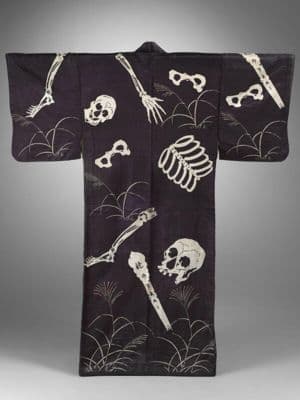
These two kimonos reveal how Japanese textile artists have always understood pattern as pure visual pleasure, whether celebrating life or flirting with death. The earlier kosode's scattered skulls and bones float against black cotton like a memento mori made playful, while the Depression-era kimono transforms flowing water into ribbons of purple and aqua that seem to dance across the fabric.
Echoes Across Time
Great Depression → Victorian Early / Crinoline · 95yr62%
SHARED
These two kimonos reveal how Japanese textile artists have always understood pattern as pure visual pleasure, whether celebrating life or flirting with death. The earlier kosode's scattered skulls and bones float against black cotton like a memento mori made playful, while the Depression-era kimono transforms flowing water into ribbons of purple and aqua that seem to dance across the fabric.
Worn with·obiWorn with·undergarmentsTechnique·resist-dyeing
Pull the Thread→
Follow this garment wherever the graph leads