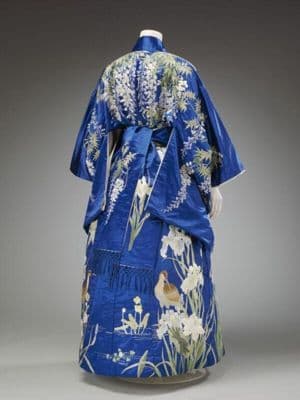
V&A
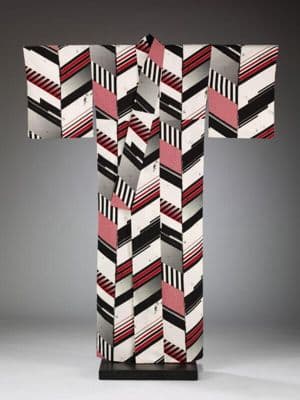
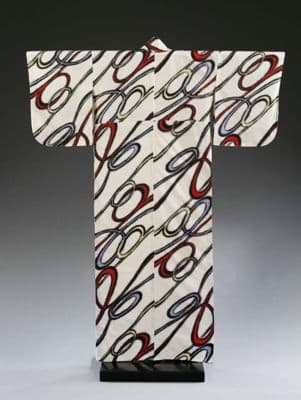
Cream Burgundy Black Meisen Silk Kimono
Great Depression · 1920s-1930s · Japanese
Production
mass-produced
Material
meisen silk
Culture
Japanese
Influences
kasuri ikat technique · Art Deco geometric abstraction
This meisen kimono displays the characteristic straight-line construction of traditional Japanese robes, with wide rectangular sleeves and a T-shaped silhouette. The machine-spun pongee silk fabric features an abstract geometric pattern created through kasuri ikat technique, where both warp and weft threads were resist-dyed before weaving. The design shows flowing, ribbon-like motifs in burgundy and black against a cream ground, creating a modern interpretation of traditional Japanese textile arts. The meisen technique, popular in the early-to-mid 20th century, allowed for more affordable silk garments with bold, contemporary patterns that appealed to urban consumers seeking fashionable yet accessible kimono.
dressstraightfloor length
Connected To
Worn with·obiWorn with·undergarmentsTechnique·machine-weaving
SHARED75 years
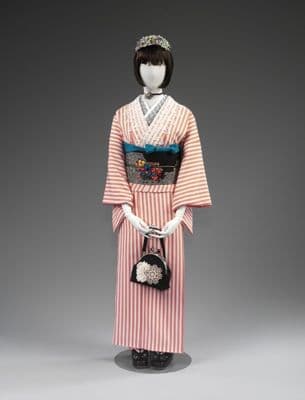
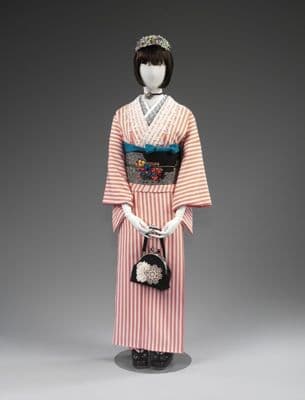
The pink striped kimono's crisp polyester geometry and the meisen silk's swooping abstract pattern represent two moments when Japanese textile makers embraced industrial innovation—the first responding to postwar synthetic materials, the second to Depression-era cost-cutting that made meisen weaving accessible to the emerging middle class.
Echoes Across Time
Japanese Traditional → Great Depression · 75yr58%
SHARED
The pink striped kimono's crisp polyester geometry and the meisen silk's swooping abstract pattern represent two moments when Japanese textile makers embraced industrial innovation—the first responding to postwar synthetic materials, the second to Depression-era cost-cutting that made meisen weaving accessible to the emerging middle class.
Worn with·obiWorn with·undergarmentsTechnique·machine-weaving
Pull the Thread→
Follow this garment wherever the graph leads