Great Depression · 1930s · Japanese
Production
handmade
Material
silk
Culture
Japanese
Influences
woodblock print aesthetics · traditional landscape painting
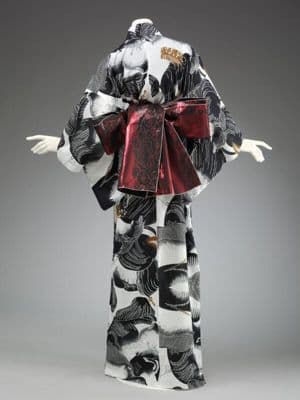
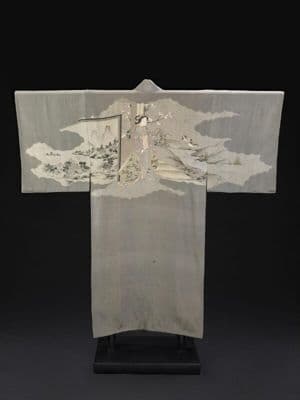
This Japanese under-kimono displays the characteristic T-shaped construction with wide, straight sleeves and a rectangular body panel. The pale gray silk ground features a subtle landscape motif rendered in muted tones across the back panel and sleeves, likely inspired by woodblock print aesthetics. The imagery appears to depict stylized clouds, mountains, or architectural elements in a painterly wash technique. The garment shows typical juban proportions with sleeves that extend horizontally when laid flat. The silk appears to have a smooth, lightweight weave suitable for layering beneath an outer kimono. The decorative treatment is restrained and sophisticated, reflecting 1930s Japanese textile design that balanced traditional motifs with modern sensibilities.


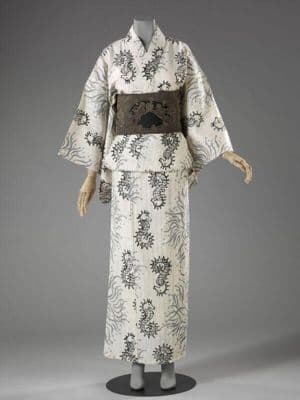
These two garments reveal how Japanese textile designers have long understood that the most powerful patterns whisper rather than shout. The contemporary yukata's bold black brushstrokes against white cotton echo the delicate landscape motifs scattered across the silk under-kimono's pale ground, both using negative space as deliberately as any mark.

Follow this garment wherever the graph leads
These two garments reveal how Japanese textile designers have long understood that the most powerful patterns whisper rather than shout. The contemporary yukata's bold black brushstrokes against white cotton echo the delicate landscape motifs scattered across the silk under-kimono's pale ground, both using negative space as deliberately as any mark.
These two garments reveal how Japanese textile artistry adapts while maintaining its essential DNA across decades of upheaval. The earlier cream silk obi displays the classical restraint of traditional Japanese design—those scattered black floral motifs floating against pale silk like ink dropped in water, each bloom precisely placed with the kind of spatial confidence that comes from centuries of refinement.
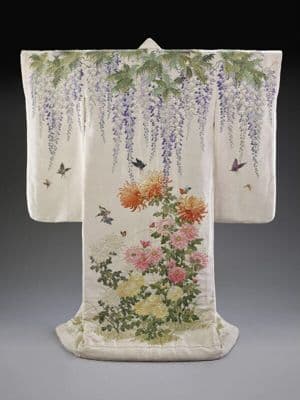
These two kimono reveal how Japanese textile artistry adapted to economic realities across three decades. The earlier piece lavishes hand-embroidered wisteria cascades and chrysanthemums across ivory silk—the kind of meticulous needlework that required months of skilled labor and serious money.

These two garments reveal how Japanese textile artistry adapts while maintaining its essential DNA across decades of upheaval. The earlier cream silk obi displays the classical restraint of traditional Japanese design—those scattered black floral motifs floating against pale silk like ink dropped in water, each bloom precisely placed with the kind of spatial confidence that comes from centuries of refinement.