V&A
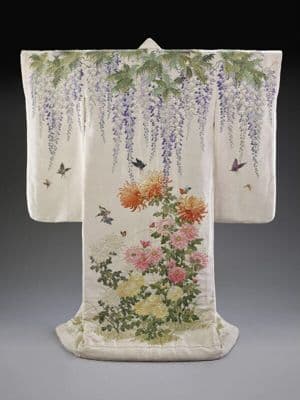
Ivory Silk Kimono with Wisteria and Chrysanthemum Embroidery
Edwardian · 1900s · Japanese
Production
artisan-craft
Material
silk crepe
Culture
Japanese
Influences
Meiji period naturalistic embroidery · seasonal flower arrangement principles
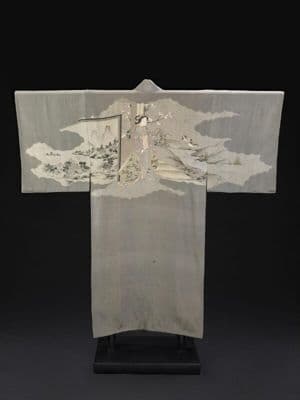
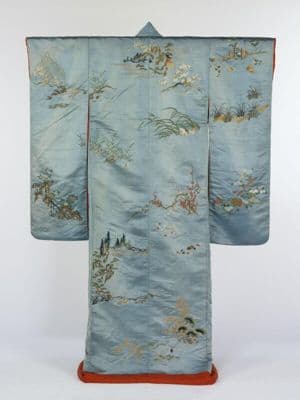
This formal kimono displays the classic T-shaped silhouette with wide, flowing sleeves and a straight body panel. The ivory silk crepe ground is decorated with cascading purple wisteria clusters hanging from the shoulders, creating vertical movement down the garment. The lower portion features a dense garden composition of chrysanthemums in pink and orange tones, interspersed with smaller flowering plants and delicate butterflies. The embroidery work combines silk thread embroidery with possible painted details, creating dimensional texture in the floral motifs. The seasonal motifs of wisteria and chrysanthemums represent spring and autumn respectively, a sophisticated juxtaposition common in Meiji-era formal wear that demonstrates the wearer's cultural refinement.
dressloose fitfloor length
Connected To
73%
Worn with·getaWorn with·tabiWorn with·undergarmentsFunction·
Echoes Across Time
2000s → Edwardian · 110yr73%
SHARED
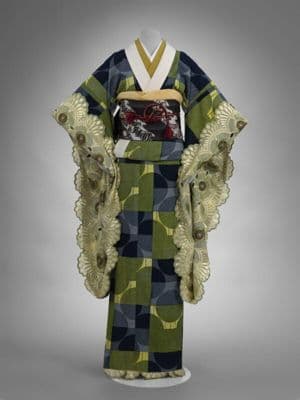
The navy geometric obi and the ivory floral kimono represent two poles of Japanese textile artistry—one embracing bold modernist abstraction, the other steeped in classical naturalism. Where the Edwardian kimono cascades with delicate wisteria and chrysanthemums rendered in subtle embroidery, the contemporary obi commands attention with its stark checkerboard pattern and metallic gold accents that read almost architectural.
Worn with·getaWorn with·tabiWorn with·undergarments
Pull the Thread→
Follow this garment wherever the graph leads