V&A
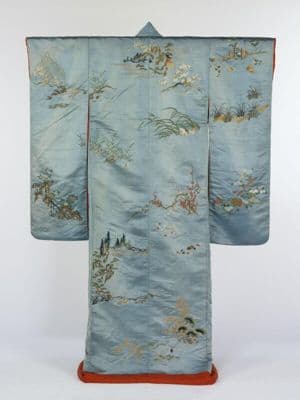
Pale Blue Silk Satin Kimono with Embroidered Scenes
Romantic · 1820s-1860s · Japanese
Production
handmade
Material
silk satin
Culture
Japanese
Influences
Edo period textile arts · Japanese scenic embroidery traditions
This formal kimono displays the classic T-shaped construction of rectangular silk panels sewn together without fitted shaping. The pale blue silk satin ground provides a lustrous surface for elaborate embroidered scenes depicting landscapes with flowering trees, birds, and architectural elements scattered across the fabric in an asymmetrical composition. The embroidery work uses silk threads in gold, coral, and cream tones, creating dimensional surface texture through varied stitch techniques. The wide sleeves extend in the traditional furisode style, and the garment length reaches to the ankles. Red silk binding edges the hem and sleeve openings, providing structural finish and color contrast. The scenic motifs follow Japanese artistic conventions of the Edo period, with naturalistic elements arranged in a flowing, non-repeating pattern across the kimono's surface.
dressloose fitfloor length
Connected To
65%
Worn with·obiWorn with·undergarmentsTechnique·hand-embroideryFunction
Echoes Across Time
Edwardian → Romantic · 65yr65%
SHARED
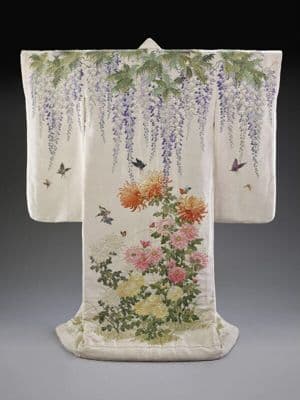
These two kimonos reveal how Japanese textile artists mastered the art of atmospheric storytelling through embroidery, but with completely different emotional registers. The ivory kimono creates an intimate garden moment with its cascading wisteria and grounded chrysanthemums—nature observed from within, butterflies caught mid-flutter as if you're standing still in a private courtyard.
Worn with·obiWorn with·undergarmentsTechnique·hand-embroidery
Pull the Thread→
Follow this garment wherever the graph leads