V&A
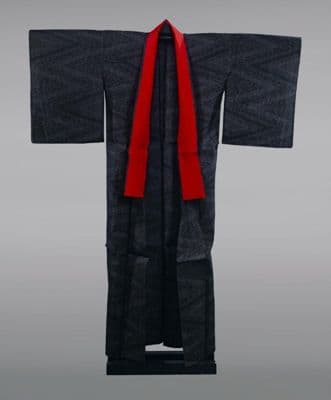
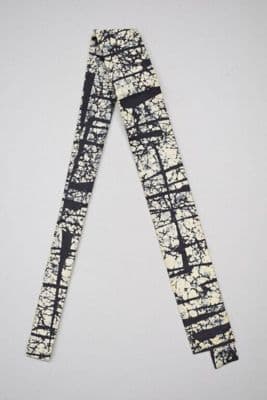
Navy Blue Resist-Dyed Silk Jacquard Obi
2000s · 2010s · Japanese
Designer
Serge Mouangue for Wafrica
Production
artisan-craft
Material
resist-dyed jacquard-woven silk
Culture
Japanese
Movement
contemporary kimono revival · Indie Sleaze
Influences
traditional furisode silhouette · African textile patterns
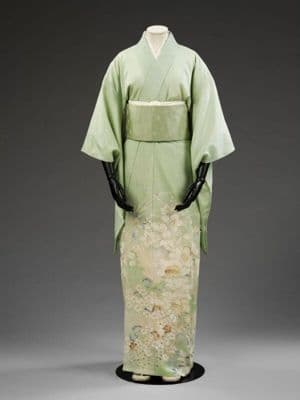
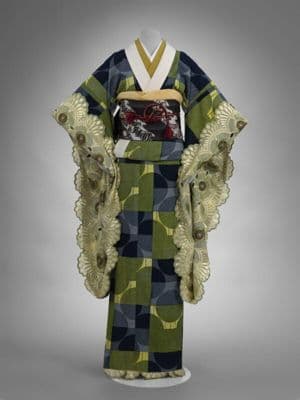
This furisode kimono displays the characteristic long, flowing sleeves that extend nearly to the floor, indicating it is meant for unmarried women in formal contexts. The garment features a geometric checkerboard pattern in navy blue and olive green across the main body, with elaborate cream-colored decorative elements along the sleeve edges that appear to be floral or cloud motifs. The wide obi sash at the waist shows intricate patterning in burgundy and other colors, tied in traditional fashion. The kimono's construction follows classical Japanese tailoring with straight seams and rectangular fabric panels, while the resist-dyed jacquard silk demonstrates sophisticated textile production combining traditional Japanese dyeing methods with contemporary weaving technology.
belt
Connected To
73%
Worn with·getaWorn with·tabiWorn with·undergarmentsFunction·
Echoes Across Time
2000s → Edwardian · 110yr73%
SHARED
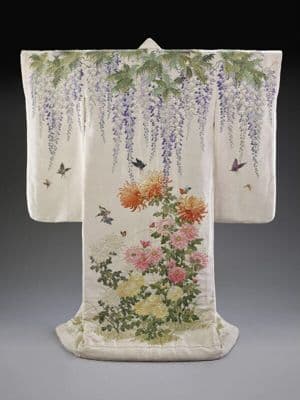
The navy geometric obi and the ivory floral kimono represent two poles of Japanese textile artistry—one embracing bold modernist abstraction, the other steeped in classical naturalism. Where the Edwardian kimono cascades with delicate wisteria and chrysanthemums rendered in subtle embroidery, the contemporary obi commands attention with its stark checkerboard pattern and metallic gold accents that read almost architectural.
Worn with·getaWorn with·tabiWorn with·undergarments
Pull the Thread→
Follow this garment wherever the graph leads