THE MET
Cream Kid Leather Elbow-Length Formal Gloves
Rococo · 1780s-1800s · British
Production
handmade
Material
kid leather
Culture
British
Influences
Rococo decorative arts · French court fashion
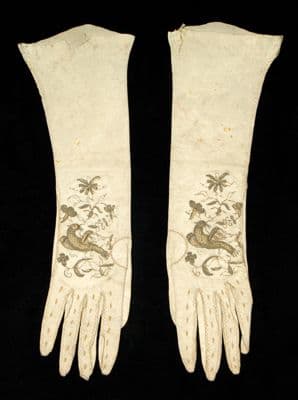
A pair of cream-colored kid leather gloves extending to the elbow, characteristic of 18th-century formal wear. The gloves feature brown embroidered decoration on the lower portion, depicting floral motifs with scrolling vines and what appears to be a bird or mythological creature. The embroidery is executed in a naturalistic style typical of Rococo decorative arts. The gloves have individual finger construction with fitted fingertips and appear to have been shaped while wet to conform to the hand. The leather shows age-related discoloration and some surface wear, particularly visible as darker spots and creasing. The cuffs are plain without additional trim, allowing the embroidered panel to serve as the primary decorative element.
glovewrist-length
Connected To
Influences·French court fashionInfluences·Rococo decorative artsTechnique·hand-embroideryFunction·court-formal
SHARED10 years · cross-culture · cross-category
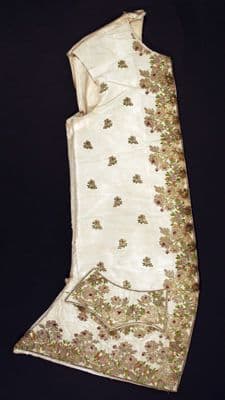
These two pieces speak the same decorative language of 18th-century refinement, where every surface was an opportunity for delicate ornament. The gloves' embroidered florals climbing up from the cuffs echo the scattered blooms across the waistcoat's cream silk ground—both deploy that Rococo trick of making nature look artfully tamed through metallic threads and careful spacing.
Text65%
Influences·French court fashionWorn with·chemiseWorn with·staysTechnique·hand-embroidery
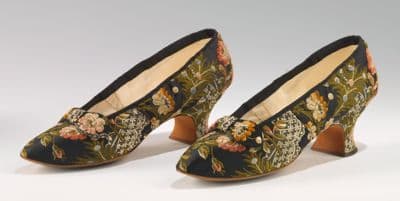
Influences·French court fashionWorn with·formal gownTechnique·leather-workingFunction·court-formal
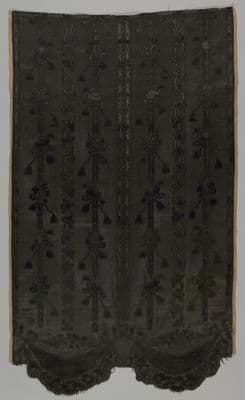
Influences·French court fashionWorn with·chemiseWorn with·staysFunction·court-formal
Echoes Across Time
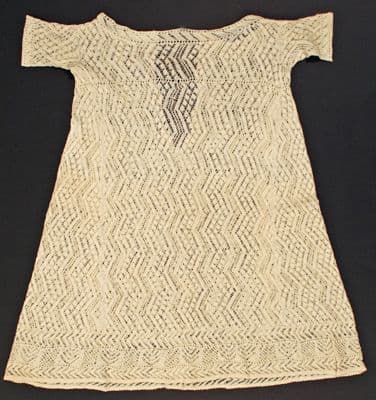
Rococo → Neoclassical Transition · 40yr56%
SHARED
These cream-colored pieces share the 18th century's obsession with intricate handwork as social currency, though they mark opposite ends of an era's transformation. The gloves' delicate floral embroidery speaks to Rococo refinement—those tiny botanical motifs required hours of skilled needlework to signal their wearer's leisure class status.
Worn with·chemiseWorn with·staysTechnique·hand-embroidery
Pull the Thread→
Follow this garment wherever the graph leads